



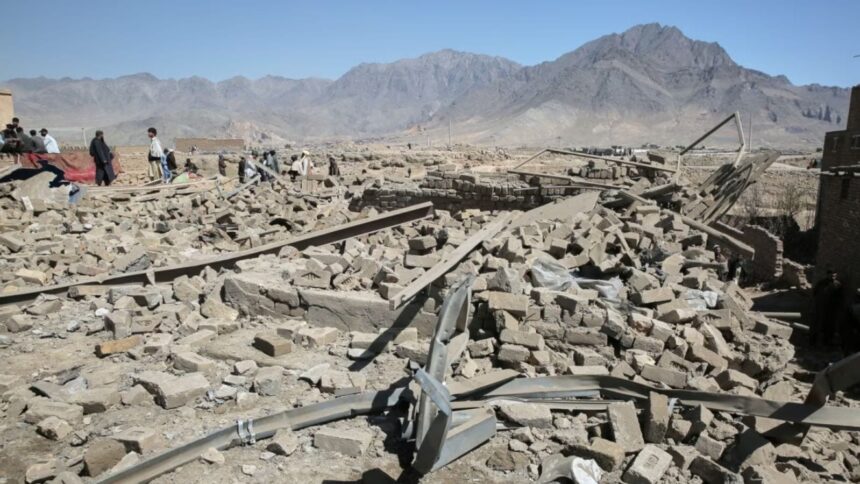
In a sharp attack on Pakistan at the United Nations, New Delhi accused Islamabad of carrying out “trade and transit terrorism” against Afghanistan and condemned , saying that dressing up a massacre as a military operation does not absolve those responsible, news agency PTI reported.
Speaking at a UN Security Council meeting on the situation in Afghanistan on Monday, India’s Permanent Representative to the UN, Harish Parvathaneni, said Pakistan’s military strikes had caused significant civilian casualties and suffering.
“Pakistan’s campaign of military airstrikes against Afghanistan is causing huge civilian casualties and suffering to the Afghan people,” he said, describing the attacks as a violation of Afghanistan’s sovereignty and a threat to regional peace and stability.
India strongly condemned the strikes, calling them blatant violations of international law, the UN Charter and the principle of state sovereignty.
No faith can justify such actions: India
Citing figures from the UN Assistance Mission in Afghanistan (UNAMA), Parvathaneni said 372 civilians were killed and 397 injured during the first three months of the year, with most casualties occurring during the holy month of Ramadan.
“No faith, no law and no morality can justify such actions,” he said, according to the report.
With Pakistan present at the meeting, Parvathaneni asserted that “dressing up a massacre as a military operation does not absolve the perpetrator” and added that “killing, maiming and orphaning civilians is not counter-terrorism.”
He further accused Pakistan of hypocrisy, saying it invoked international law and Islamic solidarity while carrying out airstrikes during Ramadan.
“Blaming neighbours for its own failures is an old Pakistani habit. This attempt to hoodwink the world will fail,” he said.
India flags Pak’s ‘organised factory of hate’
India also criticised Pakistan’s decision to refer to militant groups operating within its borders as “Fitna al Hindustan”, describing it as “officially sponsored misinformation and disinformation dressed in religious terminology.”
Parvathaneni said the move reflected an “organised factory of hate” aimed at keeping Pakistani citizens in a state of hostility towards India and diverting attention from domestic political and economic challenges.
He also referred to Pakistan’s 27th Constitutional Amendment, saying it reflected the military’s growing influence over the country’s political system.
India further accused Pakistan of imposing “trade and transit terrorism” on Afghanistan by restricting transit access for Afghan traders. Parvathaneni said the measures violated WTO norms as well as international commitments towards landlocked developing countries.
‘Pak conducting trade and transit terrorism’
He noted that India remains the largest destination for Afghan exports, provides tariff-free market access for Afghan goods, operates a dedicated air freight corridor and issues long-term business visas to Afghan traders.
“The cynical closure of access for this landlocked country is a clear weaponisation of trade and transit vulnerabilities,” he said, urging the international community to condemn Pakistan’s actions.
Responding during the meeting, Pakistan’s UN envoy Asim Iftikhar Ahmad questioned aspects of UNAMA’s reporting and said the latest UN Secretary-General’s report appeared to externalise responsibility for Afghanistan’s challenges.
Parvathaneni rejected the criticism, saying support for multilateralism and the United Nations “is not an à la carte menu”.
He also reiterated India’s position against terrorism in all its forms and called for coordinated international efforts against groups such as ISIL, Al Qaeda, Lashkar-e-Taiba, Jaish-e-Mohammed and their affiliates.

