



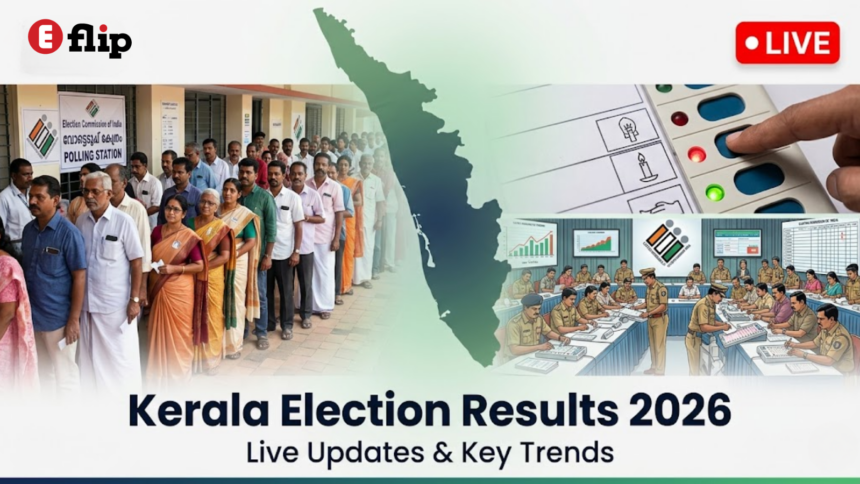
Kerala Witnesses High-Stakes Electoral Battle
Vote counting for the 2026 Assembly elections in Kerala is currently underway, drawing nationwide attention as early trends point toward a significant shift in the state’s political landscape. The contest between the two dominant alliances—the United Democratic Front (UDF) and the Left Democratic Front (LDF)—has once again turned into a closely watched electoral battle.
Initial trends suggest that the UDF is gaining a clear edge, putting it in a strong position to potentially form the next government in the state.
Counting Process Begins Under Tight Security
The counting of votes began at 8:00 AM across multiple counting centres in Kerala, with strict security arrangements in place. Officials first counted postal ballots before moving to Electronic Voting Machines (EVMs), ensuring a transparent and systematic counting process.
The smooth conduct of counting reflects the state’s strong administrative framework and commitment to free and fair elections.
UDF Gains Momentum, Eyes Return to Power
The United Democratic Front, led by senior Congress leader V. D. Satheesan, has emerged as the early frontrunner in the election.
After spending nearly a decade in opposition, the UDF is now poised for a comeback, supported by:
- Growing anti-incumbency sentiment
- Focus on economic and employment issues
- Strong campaign at the grassroots level
If current trends continue, this could mark a significant political turnaround in Kerala.
LDF Faces Anti-Incumbency Pressure
Despite implementing several welfare initiatives during its tenure, the LDF is facing:
- Anti-incumbency after two consecutive terms
- Economic challenges and public dissatisfaction
- Increased competition from the opposition
The election has effectively become a referendum on the government’s performance over the past decade.
BJP Remains a Limited but Influential Player
While the party is unlikely to challenge the two dominant fronts directly, it plays an important role in influencing vote margins, especially in closely contested constituencies.
Key Factors Driving the Election Outcome
Several important factors appear to be shaping the results:
- Anti-incumbency against the ruling government
- Rising concerns over employment and economic growth
- Strong grassroots campaigning by opposition parties
- High political awareness among voters
- Localized constituency-level issues
Kerala’s electorate, known for its political awareness, has once again delivered a competitive and unpredictable mandate.
What These Trends Mean for Kerala Politics
If the current trends hold, the 2026 election could:
- Bring the UDF back to power after a long gap
- End the LDF’s attempt to secure another consecutive term
- Reinforce Kerala’s pattern of alternating governments
The outcome may also carry wider national implications, particularly for opposition politics in India.
Conclusion
As vote counting continues, Kerala appears to be heading toward a significant political shift, with the UDF taking an early lead over the incumbent LDF.
While final results are still awaited, the trends clearly indicate that voters are reassessing political priorities, making this election one of the most important in the state’s recent history.

