



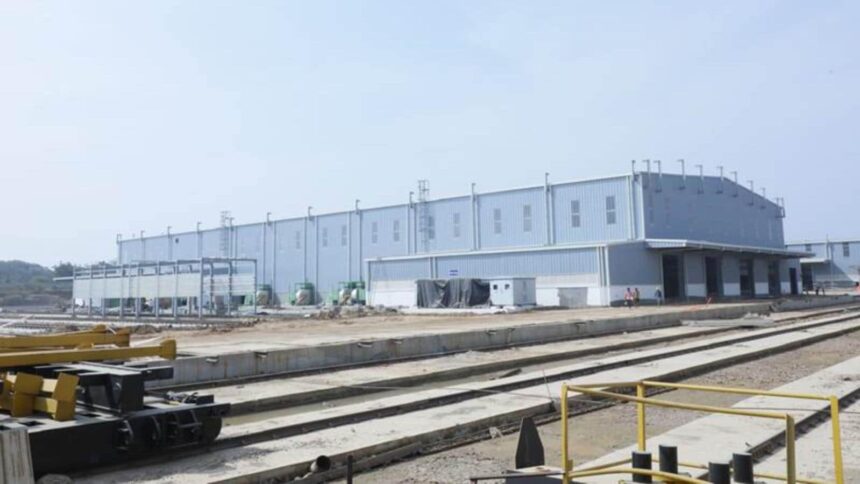
Indian Railways Kazipet Rail Manufacturing Unit: manufacturing unit at Kazipet in Telangana is set to be completed soon. The foundation stone for the project was laid by in July 2023. The project is being developed at a cost of more than Rs 500 crore. Once completed, the Kazipet Rail Manufacturing unit will produce multiple types of rolling stock including coaches, trainsets, etc.
On Thursday, Railway Minister Ashwini Vaishnaw reviewed the plans to operationalise the Kazipet Rail Manufacturing Unit. In a statement, the Ministry of Railways said that the facility will initially manufacture 200 intercity trains over the next five years.
It added that these trains will be introduced across the country for short-distance travel with frequent stops. It will run for about 300 km. “Each trip will have many stops so that the citizens can commute between towns and cities. Be it students going for higher education in their adjacent towns, or common people commuting for their health and work needs,” it said.
The new intercity trains manufactured at the Kazipet Rail Manufacturing Unit are expected to operate like shuttle services connecting nearby towns and cities across the country. The project is likely to provide passengers with a new affordable option for short-distance intercity travel.
“With the production of these trains, a large amount of local traffic is likely to move to railways from roads. The intercity trains will be equipped with modern features like automatic door closing, superior ventilation and a safe coach design with a 20-coach configuration. There will be two toilets in every coach, one at each end,” it stated.
The national transporter further stated that the new intercity trains will feature modern jerk-free couplers and advanced bogies to improve passenger comfort and ride quality. The trains are also being designed to operate at speeds of up to 130 kmph.
“The trains will also have regenerative braking. It means that when the train applies brakes, it will become a generator of electricity & feed the regenerated electricity back into the grid. It is, therefore, energy efficient. This is a greener mode of transport and will have significantly less carbon emissions vis-à-vis road transport,” it added.

