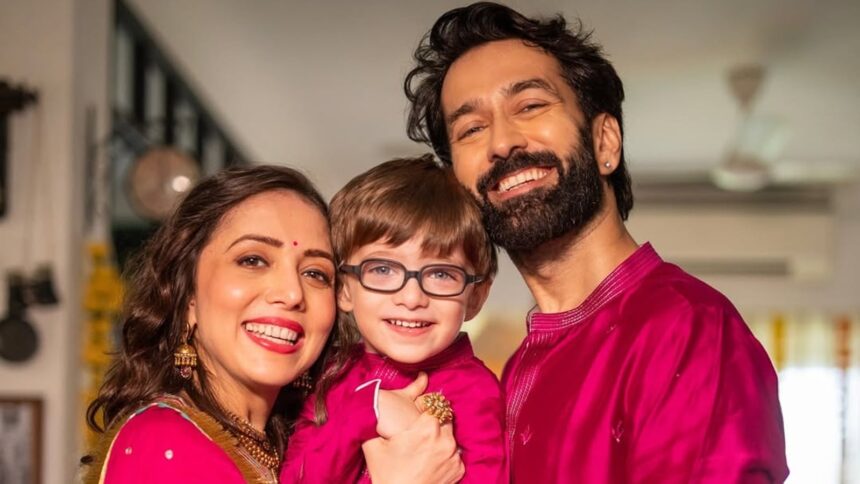
Celebrity couple Nakuul and Jankee Mehta recently shared their perspective on whether ‘it’s okay for kids to see their parents fight.’ Sharing insights on their podcast theindianparentpod, they explained, “It’s human to argue. Kids need to see that their parents are humans. They can have disagreements. But how are the disagreements happening? Is there a lot of screaming? Is there a lot of yelling? It’s very unsettling for the child when arguments, such as rage, happen at home. If you are arguing with each other, if you are listening to each other, if you have made a mistake, and if you are apologising, the kids need to see that…And they also need to know that conflict doesn’t mean that love disappears…”
But how healthy is it for children to witness conflict at home? According to Dr Pavitra Shankar, Associate Consultant in Psychiatry at Aakash Healthcare, Dwarka, “Children can actually benefit from seeing that disagreements are a natural part of relationships.” However, the emotional impact varies significantly. “It depends on the intensity, frequency, and tone,” she says. “Occasional, respectful disagreements that are resolved can be constructive. But when conflict becomes chronic, aggressive, or hostile,
Dr Shankar highlights that repeated exposure to high-intensity or unresolved conflict has been linked to anxiety, behavioural issues, and reduced emotional security in children.
“The line is crossed when arguments involve yelling, name-calling, silent treatment as punishment, or any form of aggression,” she adds. “Anything that makes a child feel unsafe, responsible, or caught in the middle is harmful.”
“Children are active decoders of what they see,” says Dr Shankar. “Calm discussions signal that relationships can withstand disagreement, which builds emotional safety.”
On the flip side, hostile arguments can trigger stress responses. “Shouting, sarcasm, or rage can dysregulate a child’s emotional system,” she explains. “Over time, this can make them more anxious, withdrawn, or even aggressive.”
These patterns often carry forward. “Children model what they observe. Healthy communication teaches negotiation and empathy, while hostile conflict may lead to avoidance or aggression in their future relationships,” she notes.
If there’s one factor that can buffer the negative effects of conflict, it’s what happens afterward.
“Conflict is far less harmful than unresolved conflict,” Dr Shankar emphasises. “Repair is what restores a child’s sense of emotional security.” Without it, children may feel confused or even blame themselves. “They’re left wondering if the relationship is breaking down,” she says.
“It involves de-escalation, acknowledging emotions, and reconnecting,” she explains. “Parents don’t need a perfect apology, but they should model accountability—showing that they can reflect, take responsibility, and make amends.”
Witnessing this process is powerful. “It teaches children that conflict is temporary and relationships can recover, which strengthens their emotional resilience,” she adds.
“Respectful disagreements can actually be valuable learning experiences,” says Dr Shankar. “Children learn that differing opinions don’t mean rejection or instability.”
This helps build key life skills. “They develop empathy, communication, and the ability to navigate differences,” she explains.
However, she cautions that the benefits depend on how conflict is managed. “Without respect, containment, and repair, the same exposure can lead to insecurity and unhealthy