



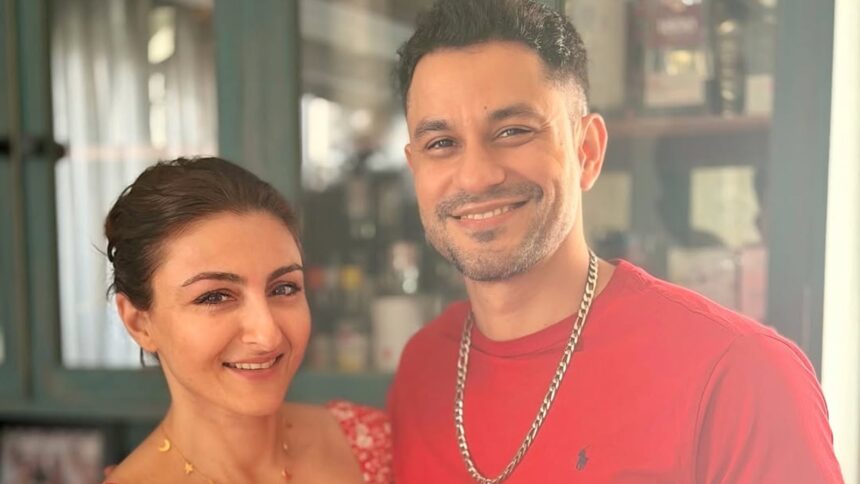
Actor Soha Ali Khan recently revisited a frightening incident from 2011, when an intruder entered her bedroom around 4 am while she and Kunal Kemmu were at home. Recalling the experience during a conversation on Yuvaa, Soha admitted that while Kunal physically confronted the thief despite having his hand in a cast, she reacted very differently in the moment.
Speaking candidly about fear and self-perception, Soha said, “When our house was broken into, and Kunal caught the thief many years ago, I stood in the corner and cried. It wasn’t my finest moment. I want to be kind to myself by saying that it was in the middle of the night, and I wasn’t prepared, but I definitely could’ve been more useful. I’m probably not the bravest person. My system tends to shut down when there’s something happening. I am working on it.” She also called herself a “phattu (coward)” while reflecting on how she responded during the .
The discussion also comes in the backdrop of another traumatic incident involving her brother, actor Saif Ali Khan, who was reportedly attacked and stabbed multiple times during a robbery attempt at his home in January 2025 while trying to protect his family.
Sonal Khangarot, licensed rehabilitation counsellor and psychotherapist, The Answer Room, tells indianexpress.com, “Human beings are wired for survival, and our automatically chooses responses based on perceived danger, past experiences, personality, trauma history, and even biology. While many people are familiar with the ‘fight or flight’ response, psychology also recognises freeze, fawn, panic, dissociation, or emotional shutdown as equally valid survival reactions.”
Some individuals instinctively fight back because their nervous system mobilises energy toward action and control. Others may freeze because the brain perceives that staying still increases chances of survival. “People with unresolved trauma or chronic stress may also react more strongly because their nervous system is already highly alert. These reactions are not signs of weakness or courage alone — they are deeply automatic protective mechanisms shaped by the brain and body trying to keep a person safe under extreme stress,” explains Khangarot.
After a frightening or traumatic situation, Khangarot reveals, many people replay the event repeatedly and judge themselves harshly for not reacting the way they imagined they “should have.” However, it is important to understand that survival responses are automatic, not conscious character decisions.
The expert recommends that a healthier way to or shame is to replace self-criticism with self-understanding. Instead of asking, “Why wasn’t I braver?” individuals can ask, “What was my mind and body trying to do to protect me at that moment?” Talking about the experience with a trusted person, therapist, or support system can also help reduce emotional isolation and distorted self-blame.
“It is equally important to avoid comparing one’s reaction to movies, social media narratives, or other people’s stories. Trauma responses differ from person to person. Healing begins when people allow themselves compassion instead of punishment for how they survived,” concludes Khangarot.



