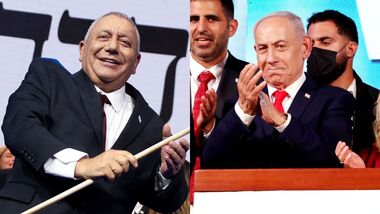
Israeli Prime Minister and opposition leader Gadi Eisenkot are neck and neck in the country’s first election since the 2023 Hamas attacks. According to exit polls, there’s no clear winner and no obvious path to a governing majority.
Netanyahu’s Likud Party appears to have gotten the most votes, the Associated Press reported. But the exit polls by major Israeli TV stations indicate that support for his religious-national coalition dropped significantly.
Exit polls suggested his opponents, led by , could secure a solid majority in the next parliament. But the opposition too is likely to fall short of a clear majority to form the next government.
Exit polls indicate that both Netanyahu’s bloc and the opposition alliance are on track to win 51 seats in parliament. That would leave each side well below the 61 seats needed to form a government with a parliamentary majority.
This has left the doors wide open for disparate parties, including Arab-led parties, to play a key role in the next government formation. Exit polls show that Arab-led parties are on track to win 19 seats.
Netanyahu, who in the past has allied with far-right and ultra-Orthodox religious parties, including Jewish Power, led by Itamar Ben-Gvir and the Religious Zionism Party, led by Bezalel Smotrich, two key members of his cabinet, has already ruled out any alliance with Arab outfits.
Netanyahu also warned earlier Tuesday that Arab parties could make or break the election, saying they were receiving “truly massive support” and heading to the polls in “unprecedented numbers.”
Eisenkot, on the other hand, has signaled he is ready to work with them under certain conditions, but that could risk alienating some of his partners.
Key Israeli Arab leader Mansour Abbas said he believed the right had “suffered a major loss” and was open to working with Eisenkot. Arab can also extend support to an Eisenkot government from outside without joining a coalition.
However, this would be a tightrope walk for Eisenkot, who shares many of Netanyahu’s views on security and has backed the Gaza offensive following the . If successful, Eisenkot, the son of working-class Moroccan Jewish immigrants, would be the first Israeli prime minister of Middle Eastern or North African descent.
If no sides can put together a coalition, new elections could be held early next year. Israel held five elections between April 2019 and November 2022 because of a similar stalemate.
No single party has ever won an outright majority in the country’s 120-seat parliament, forcing political leaders to forge coalitions. Minority governments are also possible, but they must rely on support or cooperation from parties outside the government to pass legislation.