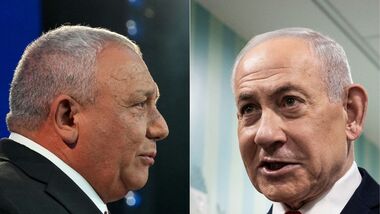
Israelis voted on 27 October to elect a new Parliament. The country witnessed a record voter turnout in what many view as one of the most high-stakes elections in its history. According to Israel’s Central Elections Committee, voter turnout stood at 77.7%, the highest since 1999 and just over 7 percentage points higher than in the previous election in 2022. So far, with no clear winner emerging, Prime Minister Benjamin Netanyahu and other parties could face weeks of negotiations to form a government.
This is Israel’s first election since the Hamas-led attack on 7 October 2023, which is seen as the deadliest day in Israel’s history. Reportedly, on 7 October, Hamas militants killed 1,200 people in Israel and took more than 250 hostages in a savage attack. It triggered a brutal retaliation from , which killed tens of thousands of Palestinians, destroyed much of and drove most of its 2 million residents from their homes.
Prime Minister Benjamin Netanyahu never took direct responsibility for the breach and has repeatedly blamed military and intelligence chiefs for failing to anticipate the 7 October attack, arguing that they underestimated Hamas and did not alert him to the threat.
Another key issue is the exemption of ultra-Orthodox parties from military services. Military service is mandatory for most Jewish men and women, and about a quarter of Jewish voters polled by the Israel Democracy Institute ranked the issue as a key factor in deciding which party to support, AP reported.
The country is struggling with a shortage of soldiers. Each year, around 13,000 ultra-Orthodox men reach the conscription age of 18, but fewer than 10% enlist, it added.
Israelis do not vote for individual candidates; they choose political parties instead. There are 120 seats in the country’s parliament, the Knesset, making 61 the majority mark. The number of seats a party secures is proportional to the percentage of the vote it receives.
Political parties with less than 3.5% of the vote, which is equivalent to 4 seats, do not get to enter the Knesset. Their vote share is subtracted from the total, and their votes are thrown out.
Before election day, each party prepares a ranked list of its candidates. If the party qualifies, the members enter the in the order of their ranking. For example, Netanyahu’s Likud party has won 25 seats, so candidates who are among the top 25 in the party’s internal ranking will enter the parliament and become members of the Knesset (MKs).
Since the majority mark is 61 in Israel’s 120-member Knesset, a party winning 61 or more seats could potentially form a government without the support of other parties. However, no single party has ever won an outright majority in a Knesset election. Parties have therefore had to join forces to secure sufficient support to form a government, a process known as coalition-building.
The president plays a key role in this process. After consulting representatives of the elected parties, the president assigns a member of the Knesset the task of forming a government. The member is given 28 days to do so, with a possible extension of up to 14 days. The person chosen is usually the leader of the largest party, but this is not mandatory. The president considers who has the best chance of forming a government that can win the Knesset’s confidence. So, the leader of the largest party does not automatically become prime minister; the key is securing enough support in parliament.
The final vote count is expected by Friday, 30 October, with official results due on 4 November, a week after the election.
(Source: Israel Policy Forum and agencies)