



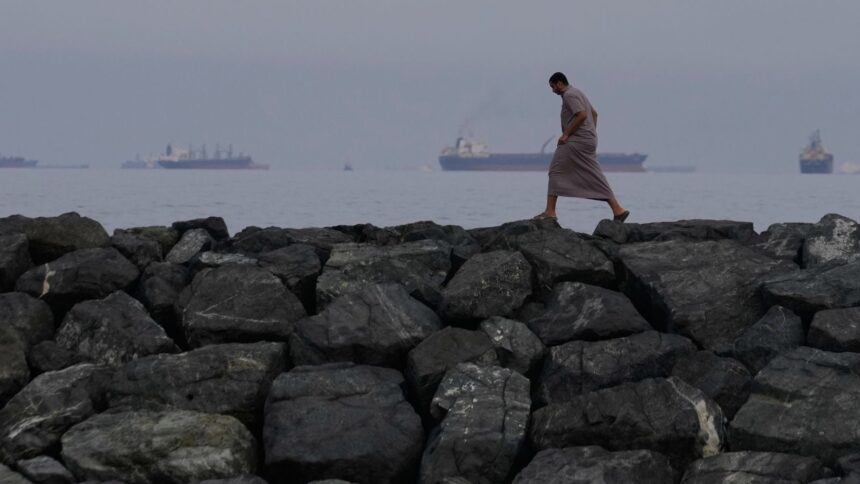
Iran on Friday said the Strait of Hormuz is “completely open” for all commercial vessels. “In line with the ceasefire in Lebanon, the passage for all commercial vessels through the Strait of Hormuz is declared completely open for the remaining period of the ceasefire,” Foreign Minister Abbas Araghchi said in a post on X.
He said the passage of ships would need to be along the route that Iran’s Ports and Maritime Organisation had announced.
Confirming the development, US President said the Strait of Hormuz is now fully open. Trump on Thursday announced a 10-day ceasefire between Lebanon and Israel. He, however, said the US blockade of Iran “will remain in full force” until Tehran reaches a deal with Washington to end the war.
“The Strait of Hormuz is completely open and ready for business and full passage, but the naval blockade will remain in full force and effect as it pertains to Iran, only, until such time as our transaction with Iran is 100% complete,” he wrote on Truth Social in all caps.
— Department of State (@StateDept)
The US-Israeli attack on Iran, which started on February 28, has killed thousands of people and destabilised the Middle East. The conflict also effectively closed the Strait of Hormuz, through which a fifth of the world’s oil and liquefied natural gas transits, threatening the worst oil shock in history.
All ships can sail through the Strait of Hormuz, but this needs to be coordinated with Iran’s Islamic Revolutionary Guard Corps (IRGC), a senior Iranian official told Reuters, adding that unfreezing Iranian funds was part of the deal.
Foreign Minister Abbas Araqchi wrote on X that the strait was open after a ceasefire accord was agreed in Lebanon, while US President Donald Trump said he believed a deal to end the Iran war would come “soon”, although the timing remains unclear.
The Iranian official said transits would be restricted to lanes that Iran deemed safe, adding that military vessels were still prohibited from crossing the strait.
It was not immediately clear if this included or excluded the established Traffic Separation Scheme (TSS) lanes for entering and exiting the Gulf used by international shipping since the 1970s.
“Even US vessels would be permitted, excluding military ships,” he said.
The official added that certain routes through Hormuz would remain open, but added that those would need to be determined as secure by Iran.
Stocks and bond prices jumped, while oil and the dollar fell sharply after Iran’s announcement. Oil dropped as much as 10% to below $90 a barrel immediately after the news, while short-dated government bond yields tumbled as investors priced out the likelihood of near-term rate hikes, especially in Europe, and stocks surged.
The dollar, which has acted as a safe-haven since the start of the war in late February, fell sharply against the euro, pound and yen.
The International Monetary Fund this week lowered its forecasts for global growth and warned the global economy risked tipping into recession if the conflict was prolonged.
Trump had said on Thursday that talks could happen as soon as this weekend, although that was looking increasingly unlikely by Friday afternoon, given the logistics of assembling officials in the Pakistani capital, Islamabad, where the talks are expected to take place.
(With inputs from agencies)

