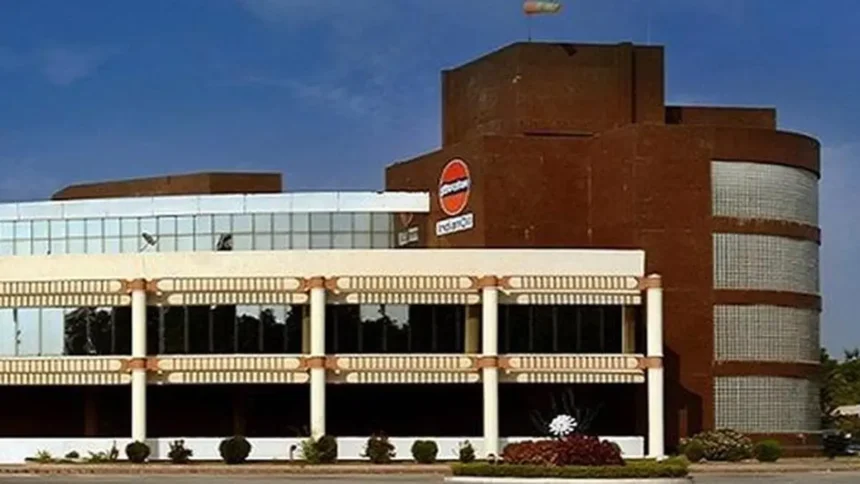
The Indian Oil Corporation (IOC) has spent around ₹48,000 crore on capital and operational expenditure at its Gujarat refinery over the past decade and is now planning another major petrochemical investment, with a proposed ₹800 crore Benzene, Toluene and Xylene (BTX) project at the Vadodara facility. The proposed project, which is in an advanced stage of planning, is expected to be commissioned within three years of receiving the necessary approvals.
IOC Chairman Arvinder Singh Sahney, speaking on the sidelines of the Gujarat refinery’s Diamond Jubilee celebrations on Friday, said the company plans to develop land parcels within the existing refinery premises for the BTX facility, avoiding the need for additional land acquisition.
“Benzene, Toluene and Xylene are the feedstocks that go into a lot of chemical and petrochemical products. These can be produced at this refinery, which we are in the advanced planning stage for. The timeline for commissioning the project from the approval stage will be around three years,” Sahney said. The proposed BTX facility will manufacture key petrochemical feedstocks used in a range of chemical and downstream petrochemical products.
IOC is also reassessing its earlier plan to establish a Polyvinyl Chloride (PVC) plant at the Gujarat refinery. The project received board approval about two and a half years ago and was originally proposed on approximately 200 acres of land the refinery intended to acquire near its existing complex. However, changing market conditions, the commissioning of new capacities and shifts in the supply-demand balance have prompted the company to revisit the project’s commercial viability. IOC will now evaluate whether to proceed with the PVC plant or consider an alternative petrochemical investment.
The fresh investment plans come amid the ongoing implementation of the ₹17,825-crore Lube Integration and Petrochemical Expansion (LuPech) project at the Gujarat refinery. Two major units under the project — Vacuum Distillation Unit-2 (VDU-2) and Catalytic Dewaxing Unit (CDWU) — have already been commissioned. These facilities will enable the production of high-grade Group II and Group III Lubricating Oil Base Stocks (LOBS), strengthening IOC’s position in the speciality lubricants segment and reducing the country’s dependence on imports.
The remaining major facilities include the INDMAX-based Resid Fluid Catalytic Cracking Unit (RFCCU), integrated with a proposed 500 KTA polypropylene unit. The polypropylene facility will manufacture higher-value polymers, further expanding the refinery’s petrochemical portfolio. Once the remaining facilities are commissioned, the Gujarat refinery’s capacity is expected to increase to 18 million tonnes per annum (mtpa).
Sahney also highlighted the company’s growing presence in automotive lubricants, noting that IOC had emerged as the country’s largest automotive lubricant oil supplier for the first time in its history in the previous quarter. He also acknowledged that despite its position as a leading producer and supplier of lube oil base stocks, the company had historically not capitalised sufficiently on the more lucrative automotive fuels segment.
Tracing the growth of IOC’s retail network, Sahney recalled that the company opened its first retail outlet in Anjar, Gujarat, in 1961. The outlet continues to operate and has been developed as a heritage facility. From that single outlet, IOC has expanded its network to approximately 42,000 retail outlets across the country.
At the broader corporate level, IOC has projects worth approximately ₹1 lakh crore in the pipeline. The company is undertaking annual capital expenditure of around ₹35,000-40,000 crore and intends to sustain this investment momentum to support its growth ambitions.
Published on November 27, 2026