



The race to build practical quantum computers is accelerating, with several tech companies now targeting systems capable of solving problems beyond the reach of classical supercomputers as soon as 2030.
IBM believes it will get there sooner, with plans to build a fault-tolerant quantum computer of 200 logical qubits by 2029. While traditional computers use binary bits to adopt one of two values (zero or one), quantum bits or ‘qubits’ can exist in all possible states between those numbers. This enables quantum computers to handle calculations involving much larger volumes of data.
The hardware giant also expects a real-world demonstration of ‘quantum advantage’ – where a quantum computer solves a problem faster and more efficiently than a classical supercomputer – in at least one problem area by the end of this year.
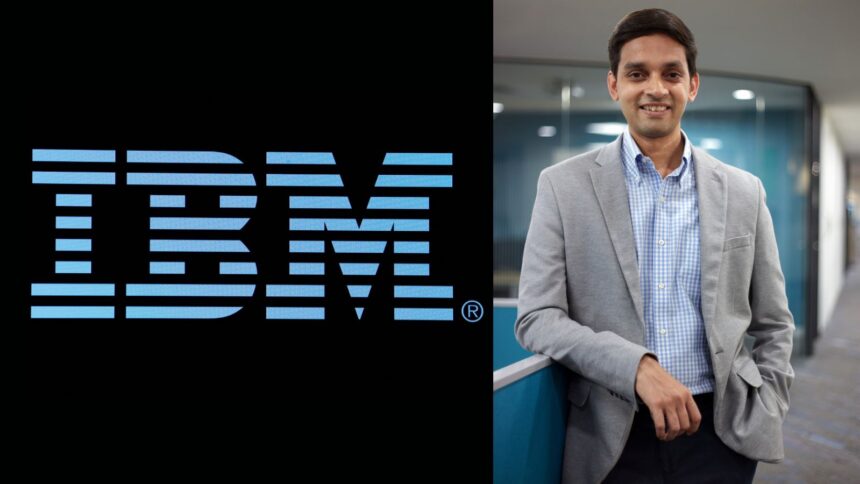
In an interview with The Indian Express, Dr Amith Singhee, Director, IBM Research India and chief technology officer (CTO), IBM India & South Asia, said quantum systems can already perform experiments that classical computers cannot simulate.
Singhee also discussed the growing urgency around post-quantum cryptography, India’s plans to build domestic quantum infrastructure under the National Quantum Mission, and why IBM sees AI and quantum computing evolving as complementary technologies rather than competing ones.
Edited excerpts from the interview:
Singhee: Today, we are at a place where, at IBM, we call it the quantum utility phase.
In the early days of quantum hardware, when you had 5 or 10-qubit computers, you could simulate a lot of the behaviour of how the quantum computer does its calculations, using a large farm of GPUs as a quantum simulator. But in 2023, our quantum computers reached 100 qubits and at that level of performance, quantum mechanics can no longer be simulated by even the most powerful simulator.
This means you can do experiments with quantum computers now, and use it as a scientific tool to do things which you cannot do with a classical computer, no matter how powerful. Discovering the useful applications and trying to identify where true quantum utility lies is where we are right now.
We are moving towards a quantum advantage phase, where someone takes a useful problem and undeniably shows that a quantum computer-based workflow could solve it much more efficiently than any classical computer-based workflow could have done it. We expect this will happen by the end of this year in at least one problem area.
After that, we will move towards a fault-tolerant quantum computing phase. In 2029, IBM has committed to coming up with a fault-tolerant quantum computer of about 200 logical qubits, which means that this computer will largely be tolerant to inherent noise and error that come from the environment.
You can actually run long quantum programmes on a fault-tolerant computer and get into a new phase of real quantum information science. Beyond that, as the hardware scales, we aim to have a 2000 logical-qubit fault-tolerant machine by 2033.
Singhee: In the 1980s, people figured out how to not just programme the logic but to learn the logic from data. That made traditional machine learning suddenly very useful in many contexts such as forecasting, regression, etc.
We are at that stage of getting through the first useful things before reaching quantum advantage. We will have new generations that will achieve the deep learning and LLM technology parallels of quantum computing down the road.
There are four problem types which we believe quantum will help with over time.
One is simulating nature to solve problems in chemistry and materials. Another is solving large optimisation problems. Third is extracting patterns from data through quantum machine learning, and the fourth is partial differential equations to simulate hydrodynamics, weather, etc.
Singhee: In terms of hardware constraints, we do not see any major roadblock for our plan to build a fault-tolerant quantum computer by 2029. But there are a few problems to solve along the way such as error correction.
Quantum computers are not going to become zero noise on their own. You need an algorithm on top that is constantly correcting the change that happens because of noise. A couple of years ago, we had a breakthrough in IBM with this new type of error correction code based on low density parity checks, which substantially reduces the additional number of qubits you need to correct the error. It is still an active area of research.
Another important research area is communication and modularity. Large quantum computers will not run on just one chip. It will be multiple systems connected together. And that connectivity will have to be quantum-enabled so that if a qubit on this chip and a qubit on another chip have to be entangled, then the connectivity will support it.
Singhee: While recent research has accelerated estimates for quantum threats, a practical quantum attack on modern encryption is still some years away. A number of nationals and standards bodies are recommending migration of critical systems to quantum safe cryptography by the early 2030s.
Quantum computing could someday soon be powerful enough to be used to break today’s encryption. Even before then, any data protected by public-key encryption could be vulnerable to “harvest now decrypt later attacks”.
As we progress in this quantum era, accelerating quantum-safe transformation and building crypto-agility is imperative. Organisations must modernise during this transformational time so they can quickly respond to risks and adapt their systems, applications, and platforms.
In the US, the National Institute of Standards and Technology (NIST) is already publishing post-quantum cryptography standards to protect encrypted data from quantum-enabled threats. In August of 2024, two IBM-developed algorithms were officially published among NIST’s three post-quantum cryptography standards: ML-KEM and ML-DSA.
Singhee: All countries have large exposures since they all have critical infrastructure – digital and physical – that relies on classical cryptography. India is no different, but yes, our digital public infrastructure does need prompt attention for creating a governed approach for ensuring a quantum safe implementation.
Singhee: That’s not the primary outcome I expect because the demand for AI is growing exponentially and the kind of problems that quantum computing will address goes beyond what AI models look to solve. I would expect that demand for both GPUs and quantum computers will continue to grow, and they will augment each other. But it’s hard to predict what may happen in 5-10 years.
Singhee: Take protein modelling. It is an area where AI models such as Google’s AlphaFold have made tremendous advances. But we are also trying to apply quantum in that general domain while trying to do different things.
If you have a protein which has thousands of atoms, an AI/ML model will try to predict the geometry, but if the protein is in a mutated state, which is not normally seen, then it will have a hard time predicting what the geometry will be because the model’s training data does not have that.
So, quantum can be used to augment research in those cases where it’s a mutated protein or disordered protein structure. Recently, a joint Cleveland Clinic and IBM research team simulated the electronic structure of the 303-atom miniprotein called Trp-cage.
So you can use an AI tool like AlphaFold to get the geometry of the protein, and then feed the geometry into the quantum computer to get to the next level of details such as its electronic structure or energy levels. At the end of the day, we expect computer scientists will think holistically about using both AI and quantum computers to do even more.
Singhee: A lot of enterprises are using quantum computing today. We have more than 70 enterprises globally that are part of the IBM quantum network, and are using quantum computing mostly for R&D and solving business problems.
To actually get to the place of business deployment, we have to go through this journey of quantum advantage and fault-tolerant computing.
Within IBM, of course, we are developing our own quantum machines, so we use them a lot to test them and do our own algorithms research. The business model we have is pretty viable, we sell quantum computing services to lots of organisations for the R&D part of their business.
There are a lot of startups who are working in the algorithm layer, creating algorithms for optimisation, drug discovery, etc. And those will also become viable business models in coming times in 5-7 years.
At some point, I also expect services to be an important business model. Once businesses reach the point where usable quantum algorithms exist, somebody wants to customise them for their own operations and integrate them into existing workflows. That is where IT consulting and services will become increasingly important.
Singhee: With Andhra Pradesh, we have a collaboration to deploy an IBM Quantum System Two at the Amravati Quantum Computing Centre. Construction is underway and there are still some formalities to work out. We want to bring the best machine that is possible at that moment in time, so that it can be used by Indian researchers while keeping the data and IP within the country.
The Mission is an exciting and ambitious programme by the government. I’ve seen government officials being extremely committed to running it with rigour and we have strong researchers being funded who are going to build this out. ‘
However, I do think that a lot more is needed in terms of policy and enablement, all of which does not have to be necessarily through the Mission. Recently, IBM was a technology partner in the NITI Aayog report on a roadmap for quantum for India.
In the report, we called out many recommendations such as the lack of any investment or engagement by the actual end user companies to influence the work or even understand it at a deeper level. And while we have some good quantum computing researchers, we need to really allow for a lot more scientific exploration to actually drive breakthroughs in quantum at a global level.
Singhee: To build a strong quantum workforce, India needs a multi-tiered talent ecosystem that nurtures a wider base of quantum-aware developers and domain experts who can translate quantum capabilities into practical applications across various sectors.
Skilling initiatives should target both the existing workforce and students, with a stronger emphasis on applied, hands-on learning using real quantum systems. The National Quantum Mission has provided momentum in this direction, but there remains significant opportunity to further strengthen the ecosystem through expanded skilling initiatives that encourage exploratory approach and mindset.

