



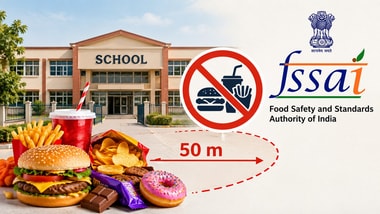
India is moving closer to introducing regulations that could restrict the sale of foods high in fat, salt and sugar within 50 metres of schools, as authorities step up efforts to curb rising junk-food consumption and childhood obesity, Reuters reported.
The proposed rules are likely to affect family-run shops, restaurants and food stalls selling high-fat, salt and sugar (HFSS) products near the country’s roughly 1.5 million schools. The move could also create challenges for global food and beverage companies, including PepsiCo, Coca-Cola, Mondelez and Nestle.
According to the Reuters report, India is separately considering warning labels for products high in fat, salt and sugar, potentially bringing its closer to those adopted by countries such as Chile and Mexico.
The Food Safety and Standards Authority of India () is driving the proposed changes as part of a broader push to encourage healthier food choices around schools.
chief executive Rajit Punhani said the objective is to prevent children from developing unhealthy eating habits at an early age, Reuters reported.
“We have to discourage children from having these. We have to inculcate this habit,” Punhani told Reuters.
He said the proposed restrictions would not have a major impact on businesses because shopkeepers could continue selling foods that do not fall under the high-fat, salt and sugar category.
The regulations are also intended to encourage food companies to reformulate products and make them healthier, Punhani said.
According to Punhani, there is currently no fixed timeline for the regulations, which were first proposed in 2020.
The authority has invited public feedback on the proposal until 6 October.
India has seen a sharp rise in the number of children and adolescents classified as overweight or obese.
According to World Federation data cited by Reuters, the number of Indians aged 5-19 considered overweight or obese increased from 28 million in 2015 to 41 million in 2025. The figure is projected to reach 56 million by 2040.
The rise comes as processed and have become increasingly popular in India. Products such as chips, chocolates and instant noodles are widely available in the market.
While the proposed federal rules aim to restrict the sale and advertising of HFSS products to schoolchildren, has adopted a broader approach.
Maharashtra has said shops within 50 metres of schools should not stock such products, state food safety commissioner told Reuters.
Mundhe said enforcing a rule based on whether a product was actually being sold to schoolchildren would be difficult, given the large number of shops located near schools.
Researchers at the University of North Carolina say five countries have proposed or implemented restrictions on the sale of around schools, while 48 countries have rules limiting such sales inside schools.
Chile introduced warning-label requirements in 2016 and also prohibited the sale and promotion of junk food in schools.
A Lancet study published this year found that after 18 months of exposure to the Chilean regulations, the probability of excess weight was 2.85% lower among girls and 2.4% lower among boys.
The regulations also encouraged manufacturers in Chile to reformulate several food products.
(With inputs from Reuters)