



The Defence Ministry on Wednesday issued the Request for Proposal (RFP) for the indigenous fifth-generation Advanced Medium Combat Aircraft project to three shortlisted private bidders – Tata Advanced Systems, Larsen and Toubro-Bharat Electronics Limited, and a Bharat Forge-BEML-led consortium – officials confirmed to The Indian Express.
The three bidders were shortlisted earlier this year by the Defence Research and Development Organisation (DRDO) to design and develop prototypes of the proposed fifth-generation fighter jets, following a tender floated by its Aeronautical Development Agency in July 2025.
The shortlisted firms will manufacture five prototypes of the fighter jet. They are expected to receive government funding to build AMCA models before manufacturing rights are granted.
State-owned HAL was not shortlisted among the bidders in this initial screening process. However, former HAL Chairman D K Sunil had told The Indian Express that AMCA is a 10-year programme and HAL would participate in its licence manufacturing when it begins around 2035.
Estimated at Rs 15,000 crore, the Cabinet Committee on Security (CCS) in 2024 had cleared the project to design and develop the indigenous multirole fighter jets.
In May last year, Defence Minister approved the programme execution model for AMCA, under which HAL had to bid independently or in partnership with other firms to get the contract for manufacturing the aircraft. This had marked a deviation from the past when such projects would be handed over directly to HAL.
The Defence Ministry had then said that the execution model approach provides equal opportunities to both private and public sectors on a competitive basis.
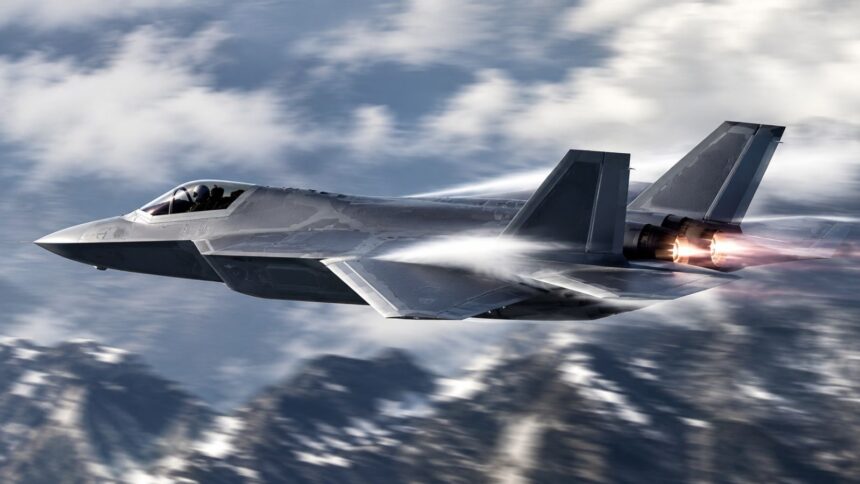
The AMCA will be a 25-tonne twin-engine aircraft with advanced stealth features, which means it can avoid getting detected by enemy radars. This would mean the aircraft would emit a low electromagnetic signature which enemy radars would not be able to detect, but at the same time have advanced sensors and weapons to detect and take down enemy aircraft.
The aircraft will have an internal fuel tank with 6.5 tonnes capacity. It will also have an internal weapons bay in its belly for a range of weapons — including indigenous ones.
According to plans, the AMCA Mk1 will fly on the existing 90kN class engine (GE 414 engines from the US), and AMCA Mk2 will be powered by a stronger engine to be developed indigenously by GTRE in collaboration with a foreign defence major.

