



India’s proposed free trade agreement with the European Union is set to open the country’s automobile market in phases, but the bigger story may be the strategic flexibility it creates for Indian auto makers. While European luxury cars and superbikes will gain faster access through lower tariffs, companies such as Tata Motors, Bajaj Auto and potentially JSW Group could find themselves benefiting from both sides of the trade arrangement.
Detailed tariff schedules disclosed on September 11 show a two-speed opening of the market. European-built petrol, diesel and non-plug-in hybrid passenger vehicles get an early entry route, while electric vehicles and commercial trucks face tighter quotas and slower tariff reductions.
Under the agreement, qualifying European cars priced above €35,000 can enter India at a 30 per cent duty in Year 1, compared with 13.75 per cent on completely knocked down (CKD) kits assembled locally. By Year 5, the rates fall to 10 per cent and 8.25 per cent respectively, reducing the tariff advantage enjoyed by local assembly from 16.25 percentage points to just 1.75 points.
“The real significance of the FTA is that it changes the product-planning equation for European brands in India. When the tariff gap between a CBU and a CKD narrows to just 1.75 percentage points for some cars, companies can be far more selective about what they localise.
High-volume products can continue to be made or assembled in India, while niche, performance, and halo models can be imported from Europe. Some may decide to forego local manufacturing over time or keep it only for exports.
This will give rich Indian consumers access to a much wider product portfolio without manufacturers having to justify local investment for every model. Though with a fresh lot, almost 1 lakh diesel luxury cars might be an interesting twist to the current policy apathy towards fossil fuel vehicles. said Avik Chattopadhyay, Brand Strategy, Marketing and Automotive Product Planning Expert.
The shift could give luxury car makers such as Mercedes-Benz, BMW, Audi and Volvo greater flexibility to reserve Indian assembly capacity for high-volume products while expanding their imported portfolios.
For JSW’s proposed partnership with Skoda Volkswagen India, the agreement provides additional breathing room in electric vehicles. European-built battery EVs and plug-in hybrids receive no preferential import quota during the first four years of the pact. A 20,000-unit concessional import window opens only in Year 5, with tariffs gradually declining thereafter.
That effectively gives manufacturers time to localise higher-volume EV production while preserving the option of importing lower-volume premium models from Europe in the future.
“For brands that have manufacturing or strategic interests on both sides of the India-EU corridor, the FTA creates another degree of flexibility. The decision is no longer simply import versus localisation; it becomes a question of which production base makes the most sense for each model, depending on volumes, costs and the role of that product in the portfolio. The only downside would be that we will be missing out on some deep R&D,” Chattopadhyay said. “You can test the market with an imported product and localise it when the volumes justify the investment.”
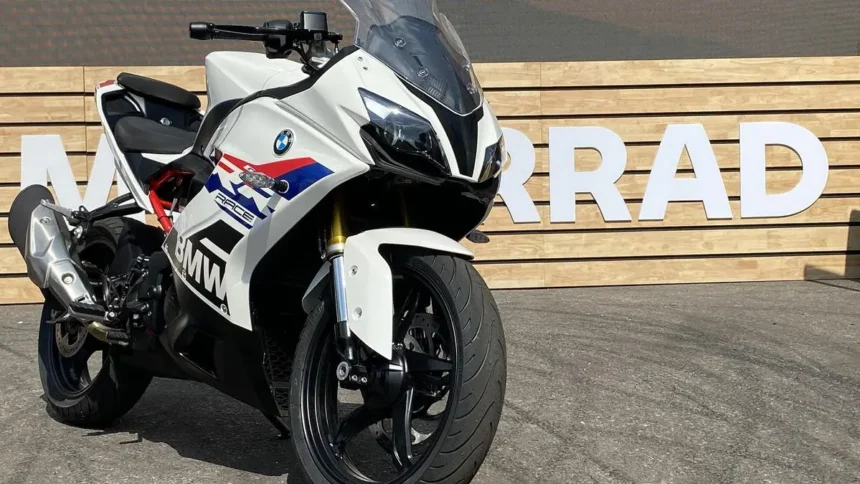
The motorcycle segment witnesses one of the steepest tariff cuts. Duty on qualifying European motorcycles above 800cc falls from 55 per cent to 32.5 per cent when the agreement comes into force and further to 10 per cent from Year 2, with no annual import quota.
While brands such as BMW Motorrad, Ducati, Aprilia and Moto Guzzi stand to gain, Bajaj Auto could have a unique advantage through its KTM relationship. With manufacturing operations in both Austria and India, the company can weigh importing premium low-volume models against local production where scale justifies localisation.
Commercial vehicles remain more protected. The combined quota for imported trucks and CKD kits starts at 5,000 units and gradually rises to 10,000 units by Year 10. First-year in-quota duties remain relatively high at 37 per cent for fully built trucks and 15 per cent for CKDs.
For Tata Motors, the proposed acquisition of Iveco could add another layer of strategic advantage. When completed, India’s largest truck maker would also own a European manufacturer eligible to benefit from the same tariff opening.
“From an investor perspective, the FTA could change how automobile companies allocate capital,” said Kranthi Bathini, Director – Equity Strategy, WealthMills Securities. “For Tata Motors, Bajaj Auto and potentially JSW, falling tariffs are not only about increased competition from Europe; they can also create sourcing and capital-allocation opportunities.”
More than a story about cheaper imports, the agreement could reshape sourcing, manufacturing and investment decisions across India’s auto industry, giving some domestic players the ability to operate on both sides of the tariff wall.
Published on September 13, 2026