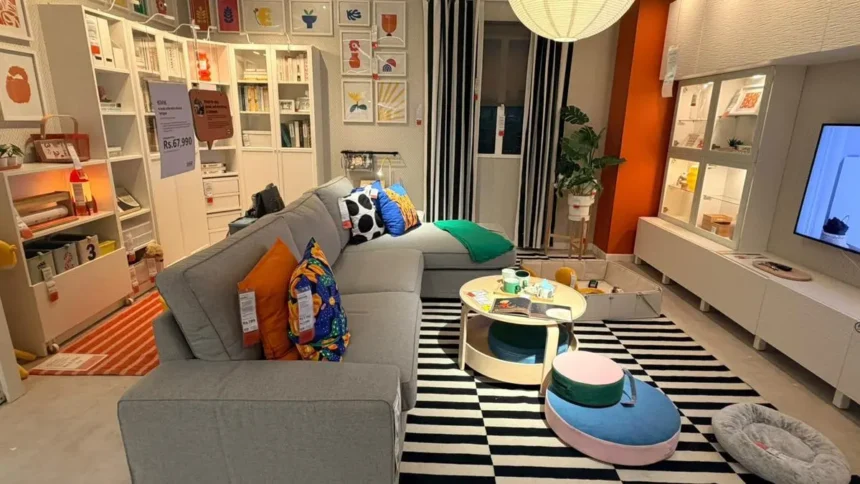
IKEA India will open its second Bengaluru store at Konanakunte Cross on November 5, expanding its physical presence through smaller urban outlets as the Swedish furniture retailer seeks to deepen its reach in existing markets and enter new cities.
The 80,000-sq-ft store at Purva Zentech on Kanakapura Main Road will offer over 5,200 products, with the full range of more than 7,000 products available to order. The store is within walking distance of Konanakunte Cross Metro station.
Bengaluru has been an important market for the company, which launched online sales in the city in 2021. “We were fortunate to see a large crowd of customers who knew IKEA,” said Adosh Sharma, Chief Commercial and Operations Officer, IKEA India. He said brand recall in South Bengaluru was around 90 per cent, helping the company identify popular product categories.
IKEA is targeting 30 stores across India by 2030 and aims to quadruple its sales by then. The company is focusing on deeper penetration in existing markets while evaluating cities such as Coimbatore, Visakhapatnam, Vijayawada, Jaipur and Chandigarh for its next phase of growth.
“Our ambition is to have people reach us either one click online or 30 minutes away physically,” said Pooja Grover, Country Expansion Manager, IKEA India, outlining the company’s long-term accessibility goal.
The retailer is also moving away from smaller plan-and-order points towards city stores that offer a broader product experience. IKEA is winding down its Whitefield plan-and-order point, a test format, after finding that the limited space restricted its ability to showcase the range, shared Grover.
The expansion comes as IKEA continues to invest in its Indian operations despite losses. The company reported revenue of ₹1,749.5 crore in FY25 and a net loss of over ₹1,300 crore. Its immediate priority remains market penetration rather than profitability, as it invests in stores, distribution centres and delivery infrastructure to support future growth, added Sharma.
IKEA expects online sales to continue contributing around 25-30 per cent of its business, with physical stores remaining central to its strategy. The company believes its investments in infrastructure and retail expansion will help it scale operations and improve cost absorption as volumes grow.
Published on October 29, 2026