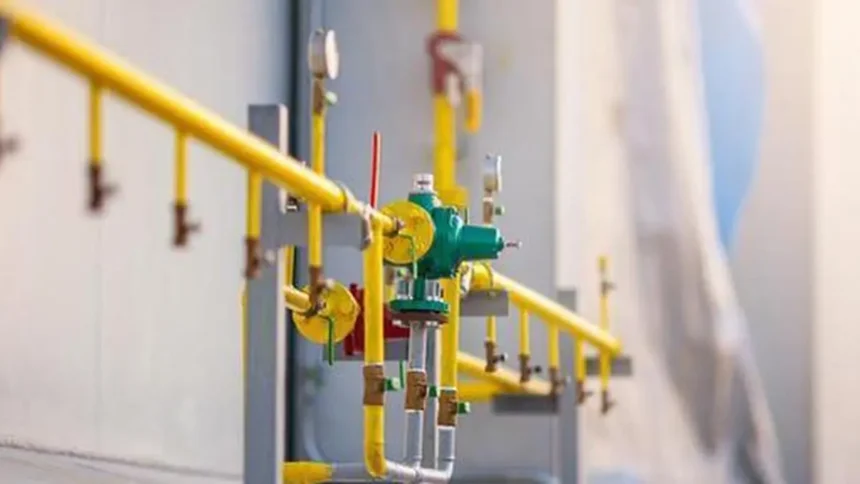
Indraprastha Gas Ltd (IGL) has signed an agreement with the Delhi Division of Northern Railway to supply piped natural gas (PNG) to 22 railway establishments across Delhi-NCR, as the city gas distributor steps up efforts to replace conventional fuels with natural gas under the government’s PNG Drive 3.0.
The agreement will initially facilitate the supply of around 3,000 standard cubic metres of gas per day (SCMD), replacing consumption of approximately 500 kg of liquefied petroleum gas (LPG) and 2,500 litres of diesel daily, IGL said in a statement.
The proposed conversion will cover railway mechanised laundries, officers’ rest houses, base kitchens, running rooms, subordinate rest houses and guard and ticket examiner lobbies across Delhi, Ghaziabad and Gautam Buddha Nagar.
The mechanised laundries at Delhi Sarai Rohilla, Old Delhi, Anand Vihar Terminal, Hazrat Nizamuddin and New Delhi will use PNG for boiler operations.
IGL expects consumption under the initiative to increase to 8,000-10,000 SCMD in the coming years as pipeline infrastructure and connectivity expand across its authorised geographical areas, including Ajmer, Banda, Rewari and Muzaffarnagar.
The agreement, signed on Friday in the presence of senior officials from both organisations, is part of a broader push to expand natural gas consumption among institutional and commercial users and reduce reliance on imported fuels.
“This partnership brings together two major organisations committed to nation building. Indian Railways has chosen IGL as its collaborative partner to replace LPG with PNG and this MoU will facilitate the substitution of a substantial quantity of LPG with natural gas, thereby helping reduce import dependence and the associated subsidy burden,” IGL Chairman Subhankar Sen said.
He added that the collaboration could pave the way for a wider transition from LPG to PNG across the Indian Railways network, extending its impact beyond Delhi.
Delhi Division Railway Manager Pushpesh Raman Tripathi said the agreement would help reduce energy costs for the national transporter and that PNG connectivity could subsequently be extended to railway hospitals and residential colonies.
“This MoU will help reduce substantial energy costs for Indian Railways and we plan to extend PNG connectivity to railway hospitals and residential colonies in the future as well,” he said.
The partnership comes as IGL intensifies efforts to expand household PNG connections under the government’s National PNG Drive 3.0.
On October 28, the company launched promotional incentives offering a Rs 2,000 discount on standard domestic PNG registration charges and Rs 500 worth of free gas after activation of a connection. The initiative seeks to accelerate registrations and gas-in conversions across Delhi-NCR and other authorised areas through outreach programmes and partnerships with resident welfare associations and apartment owners’ bodies.
IGL Managing Director Kumar Shanker said the initiative was aimed at extending pipeline-based natural gas to a wider range of institutional consumers, while structured outreach and partnerships with residential associations would help speed up household connectivity.
The twin initiatives reflect the government’s broader effort to expand natural gas use in transport, industry, commercial establishments and households. Replacing LPG and diesel with pipeline gas can reduce the need for cylinder handling and fuel storage while providing a continuous supply, although the actual cost and emissions benefits would depend on procurement prices, end-use efficiency and the fuels displaced.
IGL operates city gas distribution networks across 34 districts in 11 geographical areas spanning Delhi, Uttar Pradesh, Haryana and Rajasthan.
Its infrastructure includes more than 30,000 km of pipelines and over 1,000 CNG stations, serving more than 2.5 million CNG vehicles and nearly 3.5 million PNG-connected households.
The railway agreement offers a potential institutional template for expanding PNG adoption across public-sector establishments, while the household incentives seek to build demand at the consumer level. A wider rollout across railway facilities could provide a sizable additional market for city gas distributors and help advance India’s efforts to diversify its fuel mix and reduce dependence on imported energy. PTI ANZ ANU
ANU
Published on October 31, 2026