



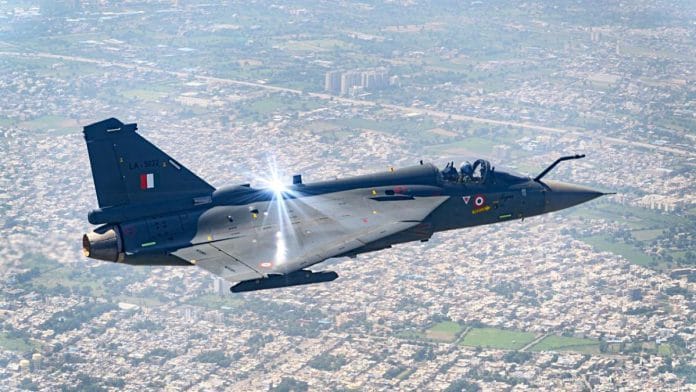
Sources said that once operational, the IAF facility will eliminate the need to depend on overseas repair centres, significantly improving turnaround times. They explained that currently, foreign engines are usually sent back to the home country for any kind of major repairs which brings down the availability ratio of the fighters. At times it takes several months for the engines to go and come back.
They further said that IAF engineers and technicians will be trained on the GE F404-IN20 engines to do the repairs. Necessary tooling and spare parts will be kept in required numbers to ensure that the turnaround time is shorter.
The IAF inducts about 200 Aero engineers every year who are then trained.
Incidentally, GE has fallen short of its contract to deliver the Tejas engines to India. Till now, it has delivered only six engines as part of a contract signed in 2021.
It is expected that the engine delivery will be streamlined by middle of this year. Both HAL and IAF are waiting with fingers crossed because GE has kept revising its timelines. of engine delivery with his American counterpart Pete Hegseth last year.
Another key project in the works between both sides is the joint production of F414 engines between GE and Hindustan Aeronautics Limited (HAL) that will power the Tejas MK 2 aircraft as well as the first lot of 5th generation fighter aircraft called AMCA. A formal contract is expected to be signed towards the end of this financial year.
Other than the Tejas, GE Aerospace engines also power the Indian Navy’s P-8I maritime patrol aircraft and MH60R helicopters, as well as the Indian Air Force’s AH-64 Apache helicopters, while LM2500 marine gas turbines provide the power for aircraft carrier and the P-17 Shivalik-class frigates.
(Edited by Nardeep Singh Dahiya)

