



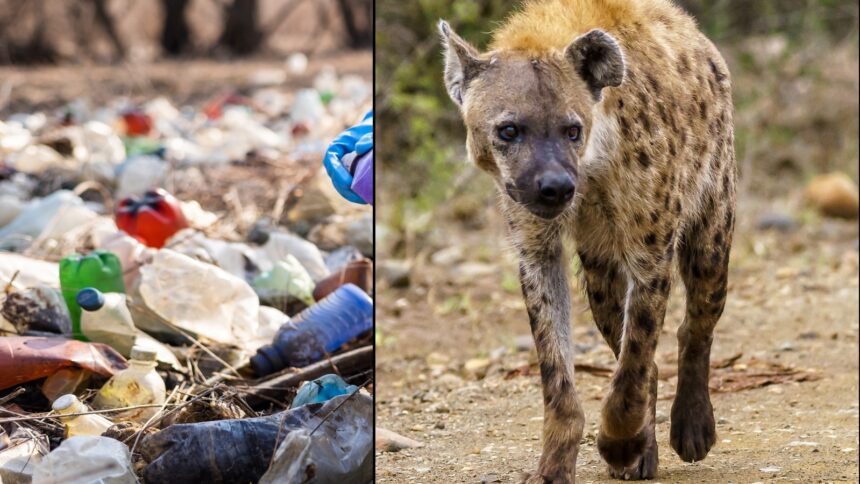
Social media is fascinated by hyenas—the bone-crushing scavengers known for their distinctive, laughter-like calls. But what has truly surprised netizens is their unexpected role in Ethiopia, where they help clean up urban waste and contribute to the local ecosystem.
A recent study led by wildlife ecology expert Dr Gidey Yirga suggests that hyenas and other urban scavengers in the Ethiopian city of Mekelle process nearly 5,000 metric tonnes of organic waste every year, significantly reducing the burden on waste systems. This doesn’t just imply clear streets but also a possible impact on public health and even climate change.
“The urban scavengers benefit from the waste that residents dispose of, and local residents benefit from the waste-clearing services of these species,” Dr Yirga told CNN, adding that this might even help reduce the risk of deadly diseases like anthrax and bovine tuberculosis spreading around.
Spotted hyenas reportedly do about 90 per cent of that work.
According to Dr Rashmi, Consultant – Microbiology & Infection Control Officer, Gleneagles Hospitals, , the idea is scientifically plausible.
“From a public health and microbiological perspective, scavengers like hyenas do play a major ecological role in removing animal carcasses and organic waste from the environment.”
In simpler terms, they act like nature’s cleanup crew. “In many ecosystems, they act as natural bio-waste processors by rapidly consuming remains that would otherwise rot in open spaces, pull insects, foul the soil and water, and possibly encourage the development of harmful microorganisms.”
Decomposing animal remains are not just unpleasant—they can potentially harbour dangerous pathogens.
According to Dr Rashmi, these may include Bacillus anthracis (anthrax), Mycobacterium bovis (linked to bovine tuberculosis), Salmonella, Clostridium species, Brucella, and various parasites.
“If those remains are kept out in the open for long stretches, they may increase the risk of disease transmission to livestock, wildlife, and occasionally humans.”
That is where scavengers may indirectly help. “They are indirectly cutting down the transmission risk by taking away carcasses by reducing prolonged environmental exposure of infectious material.”
She adds that quicker waste removal may also reduce fly breeding, foul smells, and wider contamination.
The sustainability angle is intriguing as well. According to Kapil Bhatia, Founder & CEO of UNIREC, a sustainable fashion brand, scavengers consuming organic waste before it rots may reduce methane emissions.
“Organic waste emits methane when subjected to and methane is much stronger than CO2 in relation to warming effect on the planet.”
So, in theory, animals removing organic waste earlier may reduce part of that burden. But he also cautions against romanticising the idea. “Wildlife alone cannot solve problems of urban waste disposal.”
In other words, hyenas are not a substitute for functioning waste systems.
“Hyenas and other scavenging mammals do carry pathogens themselves in saliva, faeces, oral cavities, and fur,” Dr Rashmi points out while cautioning that hyneas are not totally harmless sanitation workers.
There is also the risk of humans becoming too comfortable around wild animals. “Human habituation, such as feeding wild hyenas consistently near settlements, may make bites, scratches or zoonotic transmission more likely.”
So while Ethiopia’s unusual human-hyena coexistence offers a fascinating ecological lesson, it can’t be a permanent, reliable solution to waste and public health problems. While nature already has its own waste-processing systems, cities still need safer, smarter waste management of their own.

