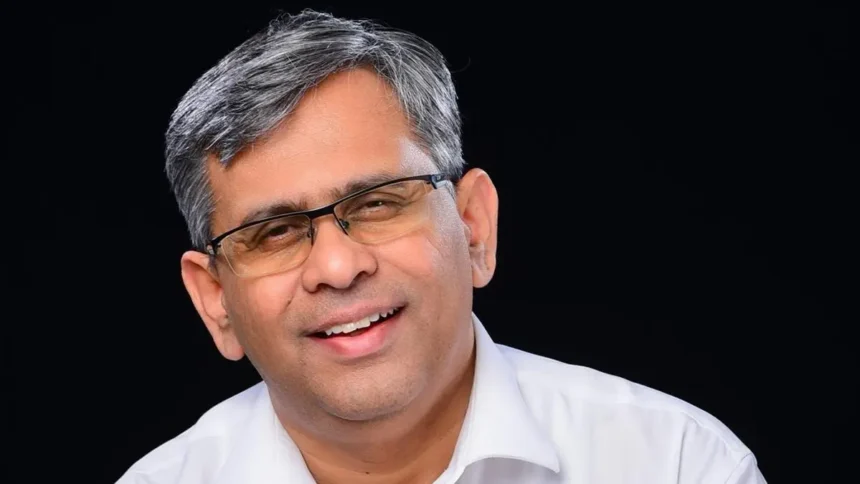
Hitachi India R&D eyes space autonomy and energy trading as the next frontiers of growth. The R&D centre is expanding its research into areas where AI must operate beyond the cloud, from autonomous space systems to intelligent power grids.
Speaking to businessline, Kingshuk Banerjee, Director-Research and Development, Hitachi India, said the 40-member centre is working on peer-to-peer energy trading, grid stabilisation, cybersecurity for connected energy equipment, and AI-led data-centre cooling.
Edited excerpts:
Which areas lead the work at Hitachi India R&D? Is AI the largest focus?
AI and digital engineering form a horizontal layer across our portfolio. Energy and mobility still depend on strong electrical, mechanical, and electronics engineering, but embedded intelligence increasingly determines how useful and differentiated the final system becomes.
We, therefore, embed AI in our devices and systems across all of Hitachi’s three major areas: energy, mobility and industrial, and cover a wide spectrum such as power equipment, rail systems, elevators, data centres and space technology. We also contribute to the digital systems and services layer, particularly fintech and payments.
How is AI changing researchers’ productivity?
A prototype that once took three months can now, in some cases, be assembled in a few hours with coding assistance. That does not make the researcher unnecessary. It allows the researcher to test more ideas and spend more time thinking. The expectation, therefore, shifts from routine implementation towards deeper knowledge, imagination and innovation.
Our caution in hiring is not driven by fear of AI; it reflects Hitachi’s approach of thoroughly understanding an area before scaling it.
What kind of fintech research is the centre undertaking?
We are working on agentic and frictionless payments.
A payment involves multiple activities, including customer identity checks, counterparty validation, and transaction processing. The aim is to make these interactions simpler and more proactive. This is especially important when a payment takes place through a third-party device. The system should understand local languages, pronunciation and regional accents.
The research challenge is to shrink the necessary intelligence into a compact model that can run on a small device or chip.
How much of this work has reached commercial use?
Some technologies have been commercialised, while others are moving towards commercialisation. In fintech, Hitachi works with Indian banks on dispute management, customer and merchant understanding, transaction relevance and proactive assistance. Our research process typically begins with a seed idea, proof-of-concept (PoC) and proof-of-technology (PoT).
Where do you expect the next wave of innovation from the India centre?
Energy is one of the most important areas. India’s electricity demand will continue to grow exponentially, particularly as data centres expand. We are working on peer-to-peer energy trading, grid stabilisation and cybersecurity for remotely controlled energy equipment such as remote terminal units (RTU).
Is Hitachi India R&D also working on space technology?
Most of Hitachi’s space research is based in Japan, but the India team has begun supporting selected initiatives. Space systems face strict constraints on energy, bandwidth, and computing capacity. They therefore need compact systems, embedded intelligence, and a high degree of autonomy. An onboard system may need to navigate, make decisions or conduct experiments without consulting ground stations. Our space research primarily relates to AI and autonomy.
What guardrails are needed when AI is used in space?
Safety and intent preservation come first. An autonomous system must operate within its intended purpose and must not take unsafe or hostile action.
Published on October 26, 2026