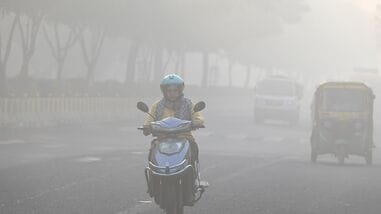
As winter approaches, is preparing to introduce measures to tackle air pollution. Restrictions taking effect on 1 November include limits on the entry of certain vehicles and a ban on construction activities that generate dust.
Earlier this week, Delhi Traffic Police shared a post on social media announcing which vehicles will be permitted and which may face restrictions under the revised Graded Response Action Plan (). It also urged motorists to check their vehicles’ eligibility before travelling and advised them to follow official traffic advisories.
According to Delhi Traffic Police, the restrictions will cover certain vehicle categories to help reduce pollution and improve the capital’s air quality.
The development comes after the national capital recorded several days of ‘poor’ air quality. However, overnight and thunderstorms on Thursday and Friday brought some relief to residents, with the air quality index (AQI) improving to ‘satisfactory’ on Friday. On Saturday, the AQI stood at 106 at around 2 pm, compared with 222 at 4 pm on Thursday, when it was in the ‘poor’ category.
Vehicles permitted to travel in the capital amid GRAP restrictions include BS-VI-compliant vehicles, CNG vehicles, electric vehicles, and exempted vehicles, subject to applicable rules.
– Vehicles meeting emission standards below BS-VI
– Vehicles without a valid Pollution Under Control Certificate (PUCC)
– Interstate buses that do not comply with the rules
– Trucks not destined for Delhi, which must use the Peripheral Expressway
– Tractors and jugad vehicles, as per applicable rules
– Certain vehicles registered outside Delhi
PTI reported that over one million vehicles coming from Gurugram, Faridabad, Noida, Greater Noida, and Ghaziabad will be affected by the Delhi government’s decision to restrict the entry of vehicles below BS-VI emission standards.
Demolition and outdoor civil construction work that generate dust will be barred from 1 November to 31 January, with exemptions for essential public infrastructure projects. Finishing, plumbing, and electrical work at construction sites may continue, provided dust-control rules are followed.
Officials said a complete ban on construction and demolition, covering indoor work as well, will be enforced from 20 December to 20 January.
According to PTI, the Delhi government has also announced a hike in parking charges in an attempt to curb . Parking charges at authorised sites will be doubled from 1 November to 28 February, with the aim of discouraging private vehicle use. The order stated that parking facilities owned and managed by the Delhi Metro Rail Corporation will remain exempt from the hike.
Further, from 1 November to 28 February, Municipal Corporation of Delhi (MCD) offices will operate from 8.30 am to 5 pm, while Delhi government offices will follow a 10 am to 6.30 pm schedule to ease peak-hour congestion.
Government and private offices must limit on-site attendance to 50 per cent of staff between 1 November and 31 January, with the rest required to work from home.
GRAP Stage I takes effect in when the AQI reaches the ‘poor’ category, ranging from 201 to 300. The Commission for Air Quality Management (CAQM) implements these measures to curb pollution from road dust, vehicle exhaust, and the open burning of waste.
At this stage, action centres on controlling pollution at its source through dust management at construction sites and on roads, checks on vehicle emissions, and measures to curb industrial pollution.
(with PTI inputs)