



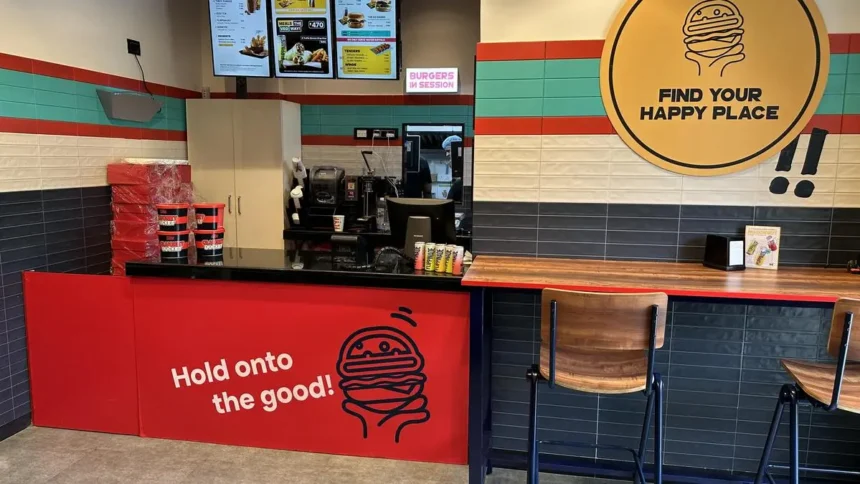
Quick service restaurant (QSR) chain Good Flippin’ Burgers is prioritising deeper penetration of its existing metropolitan markets over a rapid geographic expansion, with the quick service restaurant (QSR) chain planning to double its store count in current markets before entering more cities.
The Mumbai-based burger chain, which currently operates 60-70 stores across 11 cities, plans to add only one or two new metros over the next two to three years as it focuses on building store density and improving the economics of its existing markets.
“While demand exists in Tier-2 and Tier-3 cities, our goal is to grow holistically. That means ensuring product consistency, experience consistency, and operational viability,” said Viren D’Silva, co-founder, Good Flippin’ Burgers.
The company’s expansion strategy is also being shaped by its emphasis on store-level profitability. New outlets typically achieve payback or breakeven within three to four months, D’Silva said, adding that a significant portion of expansion is being funded through internal accruals.
“We do not believe in burning capital at the corporate level…we prioritise sustainable, profitable growth over chasing top-line numbers for the sake of scale,” he said.
Good Flippin’ Burgers is currently trending at an annualised revenue run rate (ARR) of about ₹250 crore for the current financial year, according to D’Silva.
Dine-in outlets also generate a higher average order value than delivery, making physical stores an increasingly important part of the brand’s growth strategy.
The company said it would continue to expand through third-party delivery platforms as well as its own direct channels, while keeping its menu relatively curated around chicken and vegetarian burgers.
Founded in Mumbai in 2019, Good Flippin’ Burgers is backed by Tanglin Venture Partners, Abundantia Entertainment, Karan Bhagat and Yatin Shah.
The company has raised $8.93 million across three funding rounds and reported revenue of ₹113.5 crore in FY25, while its losses widened 117 per cent to ₹18.3 crore during the year, according to Tracxn.
(The writer is an intern with businessline)
Published on August 9, 2026