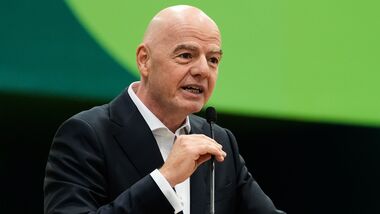
will chair the first meeting of the 37-memberCouncil since his controversial World Cup commercial rights proposal was unveiled and abandoned 11 weeks ago. The session, set for Thursday at FIFA’s Zurich headquarters, arrives as senior officials from Europe and North America intensify efforts to challenge his leadership before the next presidential election.
The agenda includes a four-part section expected to generate significant debate. Council members will examine ’s withdrawn plan to sell a permanent stake in World Cup and Club World Cup rights, the distribution of payments to FIFA’s 211 member federations from the organisation’s $5-6 billion reserves, disciplinary procedures, and overall governance standards. The meeting will take place in the basement conference room of FIFA’s slate-and-glass building next to Zurich’s zoo.
The current situation marked the most serious crisis of Gianni Infantino’s nearly 11-year presidency. He had appeared on course for a fourth and final term through 2031 after the men’s World Cup final was staged near New York on 19 July. The private-investor proposal surfaced nine days later. At the centre of the criticism is his increasingly centralised decision-making style. His former chief operating officer, described the planned FIFA Forward Enterprise spin-off as “the project of one person.” The confrontation comes ahead of an 18 November deadline for candidates to declare for the presidential election, which will be held four months later in Rabat, Morocco.
Gianni Infantino is expected to propose that each of the 211 member associations receives an extra $15 million during the 2027-2030 commercial cycle, on top of the $10 million already committed. The move appears designed to counter a suggestion from UEFA and its allies last month that could instead provide a one-off $10 million payment to each federation from existing cash reserves. UEFA argued there was no need for FIFA to raise $4.2 billion from private investors, led by , in return for a 20 per cent permanent stake in the commercial subsidiary. That sum would have supported Infantino’s earlier offer of $20 million to each federation that approved the plan by a mid-September deadline.
UEFA filed applications in US courts in August seeking authorisation to obtain evidence from FIFA and Kushner’s investment firm for a potential criminal complaint against Infantino in Switzerland. UEFA lawyers contend the $4.2 billion could represent a “fraudulently off-market price promoted by Infantino for his own benefit.” FIFA has asked the courts to reject the discovery requests and has accused UEFA of conducting a “smear campaign.”
The circumstances surrounding the creation of a FIFA peace prize, which Gianni Infantino presented to US President at the World Cup draw in Washington last December, form part of formal complaints lodged by the Norwegian Football Federation with FIFA’s ethics and governance bodies. German media have reported that the item was placed on the agenda at the request of FIFA Council member Bernd Neuendorf, president of the German Football Association. Infantino’s relationship with Trump has also attracted scrutiny over disciplinary decisions that allowed and Folarin Balogun to continue playing after receiving red cards during the World Cup.