


FSSAI will not agree to demands by global beverage companies to extend
to one year its 90-day deadline to drop “energy drink” labels, a
government source said on Friday, a decision which is set to
disrupt the industry.
PepsiCo, Red Bull, Monster Beverage and
billionaire Mukesh Ambani’s Reliance have locked horns
with Prime Minister Narendra Modi’s food regulator amid strict
enforcement actions over how alcohol, beverage and food
companies label their products.
The Food Safety and Standards Authority of India (FSSAI) in
July privately gave the companies 90 days to drop “energy
drink”, or any similar description, from high-caffeine
beverages, saying there were no Indian standards on such
products and using that term breached regulations, Reuters has
reported.
India’s energy drinks retail sales are growing 12.6%
annually, faster than in the United States and China,
Euromonitor estimates. Retail sales rose nearly 100% annually
between 2018 and 2023 and stood at 907 million litres last year
– roughly over 3 billion bottles or cans.
The FSSAI will not agree to a deadline extension as many
Indian states have conveyed that existing stocks of such drinks
can be sold out in 60-90 days, said the government source, who
declined to be named as the decision is not public.
The drinks companies have sought at least one year to
implement the decision, since they have millions of cans or
bottles in the market, or have pending orders for imported cans,
according to three industry sources.
“The companies have breached regulations by labelling them
energy drinks, they should be happy (India) is not prosecuting
them,” the government official said.
“They have not told FSSAI how much inventory is lying in
which state, which they are supposed to track to ensure
traceability,” the official added.
The industry sources said tallying stock across states was
hard given the huge volumes.
FSSAI, as well Red Bull, Monster and Ambani’s Reliance
Consumer Products did not respond to Reuters queries. PepsiCo
declined comment.
Energy drinks have sparked health concerns among some
regulators globally who worry they contain high caffeine, sugar
and taurine, an amino acid. They will be banned for under-16s in
England from April next year.
The beverage giants are also pleading with the Indian
government to halt seizures of energy drinks by some state
governments, the industry sources added.
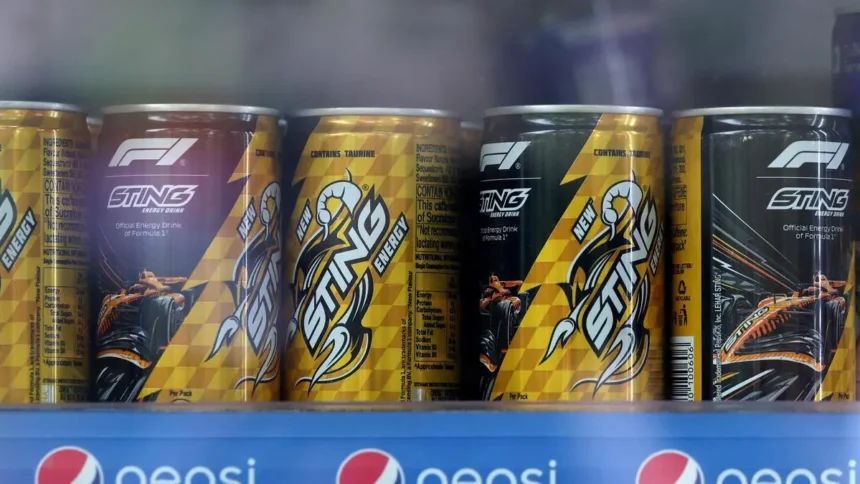
Last month, India’s Rajasthan state seized thousands of
Pepsi’s Sting, Reliance’s Campa Energy and Red Bull as part of
its enforcement drive. In a statement to Reuters, the food
safety office of the federally-administered territory of Ladakh
said they will be seizing stock.
“Seizure action is an explicit part of the district-level
inspection drive already underway,” said the office, adding that
beverages at retailers and distributors were being checked for
labelling.
The market in India boomed after Pepsi launched Sting in
2017, with its 20-rupee ($0.21) plastic bottles proving popular
among 15- to 19-year-olds and in rural areas, Euromonitor says.
Industry executives from PepsiCo, Red Bull and Monster took
their concerns about energy drinks labelling to Food Processing
Minister Chirag Paswan on Tuesday, seeking his support,
according to the industry sources.
The ministry is committed to promote “investment,
innovation, and job creation” of the sector, Paswan wrote on X
without elaborating.
Published on August 7, 2026