



Across the world, abandoned ancient cities continue to captivate travellers with their haunting beauty, mysterious histories and timeless ruins. Once thriving centres of trade, power and culture, these places now stand silent, preserving stories of empires that rose and fell centuries ago.
From India’s deserted Mughal capital to cities swallowed by jungles and deserts, these destinations are a dream for history lovers and curious explorers alike. Here are seven abandoned ancient cities you can still visit today.
1. Fatehpur Sikri, India
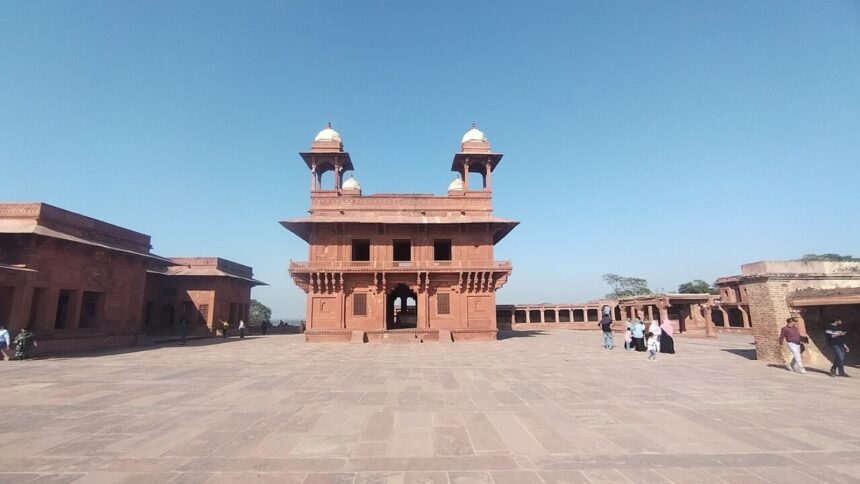
Built in the 16th century by Mughal emperor Akbar, Fatehpur Sikri was once the grand capital of the Mughal Empire. The city featured magnificent palaces, courtyards, mosques and administrative buildings made of red sandstone.
However, due to water shortages and political challenges, the city was abandoned only a few years after its completion. Today, visitors can wander through preserved structures such as Buland Darwaza, Panch Mahal and the Jama Masjid. The city’s blend of Persian, Islamic and Indian architectural styles makes it one of India’s most fascinating historical sites.
2. Pompeii, Italy
Few abandoned cities are as famous as Pompeii. In 79 CE, the catastrophic eruption of Mount Vesuvius buried the bustling Roman city under volcanic ash, freezing daily life in time.
Excavations have revealed homes, marketplaces, frescoes, amphitheatres and even human casts preserved beneath the ash. Walking through Pompeii today feels like stepping directly into ancient Roman civilisation. It remains one of the world’s most extraordinary archaeological sites.
3. Machu Picchu, Peru
Hidden high in the Andes Mountains, Machu Picchu was built by the Inca civilisation in the 15th century and mysteriously abandoned about a century later.
Surrounded by dramatic mountain peaks and mist-covered landscapes, the city remained largely unknown to the outside world until the early 20th century. Its stone temples, terraces and astronomical structures continue to amaze archaeologists and tourists alike. The site is now one of the most iconic travel destinations in the world.
4. Petra, Jordan
Carved into rose-coloured sandstone cliffs, Petra was once a thriving trading hub of the Nabataean Kingdom. The city prospered because of its strategic location along ancient trade routes connecting Arabia, Egypt and the Mediterranean.
Over time, changing trade patterns and earthquakes led to its decline and abandonment. Today, visitors enter the city through the narrow Siq canyon before being greeted by the breathtaking Treasury façade. Petra’s rock-cut architecture and desert setting make it unforgettable.
5. Angkor, Cambodia
Angkor was the powerful capital of the Khmer Empire between the 9th and 15th centuries. The vast city once housed impressive temples, reservoirs and urban settlements.
Although parts of the city were gradually abandoned due to political and environmental changes, the ruins survived within dense jungle landscapes. Angkor Wat, the most famous temple complex, remains a masterpiece of Khmer architecture and one of Southeast Asia’s greatest cultural treasures.
6. Tikal, Guatemala
Deep inside the rainforests of Guatemala lies Tikal, one of the most important cities of the ancient Maya civilisation. At its peak, Tikal was a major political, military and cultural centre.
The city was eventually abandoned around the 10th century for reasons still debated by historians, including drought and warfare. Today, towering stone pyramids rise above the jungle canopy, creating a breathtaking atmosphere for visitors exploring the ruins.
7. Palmyra, Syria
Once a wealthy oasis city along the Silk Road, Palmyra connected the Roman Empire with Persia and Asia. Its grand colonnades, temples and arches reflected a blend of Greco-Roman and Middle Eastern influences.
Although conflict in recent years damaged several monuments, Palmyra still stands as one of the ancient world’s most historically significant abandoned cities. Its ruins continue to symbolise the richness and resilience of ancient civilisations.

