



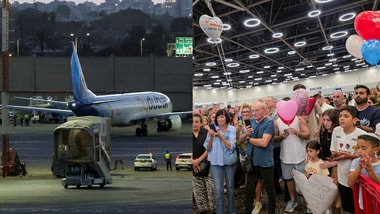
A FlyDubai flight from Dubai to Tel Aviv was diverted to Saudi Arabia after an altercation in the cockpit in which the co-pilot allegedly stabbed the captain and attempted to take control of the aircraft, Reuters reported. The incident has raised questions over the co-pilot’s background, possible motive and how he was cleared to fly.
The UAE has ordered an investigation into the incident, including whether it was connected to terrorist activity, whether there was prior planning and what motivated the attack. Saudi authorities are holding the co-pilot, while Israeli officials have also said they are conducting their own investigation.
Here is what we know and what remains unclear.
flight FZ1073 was flying from Dubai to Tel Aviv on Wednesday when a violent altercation broke out between the two pilots in the cockpit. The aircraft subsequently lost altitude, dropping from about 33,000 feet to 17,000 feet within a minute, before being diverted to Tabuk in Saudi Arabia.
Israeli Prime Minister Benjamin Netanyahu said one pilot stabbed the other and then attempted to crash the plane.
The captain, identified as Indian national Smit Machchhar, was seriously wounded but managed to open the cockpit door, allowing passengers and crew to enter and overpower the alleged attacker, according to multiple reports.
Off-duty pilots travelling as passengers then took control of the aircraft and helped land it safely in Tabuk, according to a Times of Israel report.
Several media reports have suggested that the alleged attacker may have used the aircraft’s emergency crash axe during the confrontation. Netanyahu also said the co-pilot used the cockpit’s crash axe during the brawl, according to reports.
The UAE Attorney General has ordered an investigation into the circumstances and motives, including whether the incident was linked to terrorist activity, involved prior planning or was directed by others.
An Israeli official told The Times of Israel that available information appeared to point towards a possible “jihadist” motive, but stressed that this could not be established until the investigation was complete.
Very little has been officially confirmed about the alleged attacker.
He was taken into custody by Saudi authorities after the aircraft landed in Tabuk. Reports have identified him as an Omani national, although no official confirmation of his citizenship has been announced as of yet.
Reports also said he joined FlyDubai less than a year ago. One fellow pilot told Israeli Channel 16 that he had joined about eight months earlier.
The pilot described the co-pilot as unusually religious, claiming that he prayed excessively and refused to shake hands with women.
An Israeli official told The Times of Israel that the co-pilot’s social media accounts allegedly contained references to killing Jews and indicated that he had been radicalised into “jihadist” ideology.
Netanyahu separately told Fox News that the co-pilot had undergone what he described as “Islamist radical indoctrination”. He also said the co-pilot repeatedly called on the crew to kill him.
The motive remains one of the biggest unanswered questions.
Israel has increasingly described the incident as a jihadist attack, while the UAE investigation is examining the motive, any possible terrorist connection and whether the incident was planned.
Passengers who helped overpower the co-pilot also told Netanyahu that they did not know during the incident whether other members of the crew were involved in the alleged plot.
The incident has also raised questions about the vetting and medical screening of commercial pilots.
is a UAE operator, with its certification and operational oversight falling under the UAE General Civil Aviation Authority (GCAA). The European Union Aviation Safety Agency told Reuters that this oversight includes ensuring airlines meet requirements relating to flight crews and their fitness to fly.
Under the GCAA framework cited by Al Jazeera, professional pilots must hold the appropriate licence and aircraft type rating, have a current Class 1 medical certificate, demonstrate English-language proficiency and meet required flight-experience standards.
The Class 1 medical process also covers physical and mental health. Pilots with certain psychiatric conditions or substance-misuse concerns can be referred for further assessment before being declared fit to fly.
Israeli media have reported that an agreement between Israel and the UAE requires pilots flying into Israel to hold passports from countries that have diplomatic relations with Israel.
The aircraft landed safely in Tabuk after passengers and crew subdued the alleged attacker.
The two relief pilots who subsequently took control of the aircraft were already travelling on the flight, according to a Channel 12 report cited by The Times of Israel.
The presence of qualified pilots on board allowed them to take over after the cockpit incident and help land the aircraft safely.
Captain Smit Machchhar, who was stabbed during the incident, was initially treated in Saudi Arabia before being transferred to the UAE.
The Indian embassy in the UAE said Ambassador Deepak Mittal visited Machchhar and his family at the hospital and that the captain was “in good health and recovering well”.
The embassy also said it remained in contact with local authorities over his medical care.