



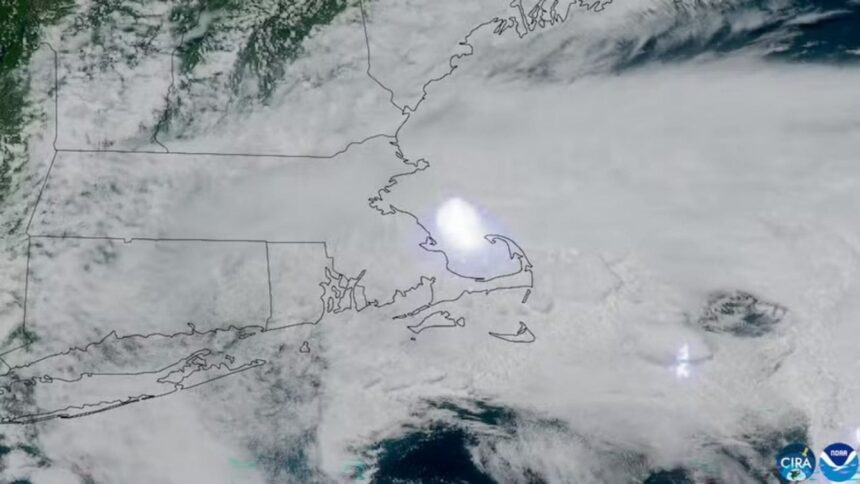
A bright fireball meteor that streaked across the sky over the northeastern United States on May 30 exploded with the force of approximately 230 tonnes of TNT, according to .
The space agency said the meteor measured around 5 feet (1.6 metres) across and entered Earth’s atmosphere at an estimated speed of 42,000 mph (67,000 km/h). As it plunged through the atmosphere, intense friction caused it to heat up and eventually break apart about 31 miles (50 kilometres) above the ground.
The explosion generated a loud sonic boom that was heard across several northeastern states as well as parts of Canada. Witnesses reported hearing a thunder-like blast and feeling buildings shake around 2.06 pm Eastern Daylight Time (EDT).
Nasa estimates the meteor had a mass of roughly 5.6 metric tonnes before it fragmented. The agency said debris from the meteor likely fell around the Cape Cod region after the breakup.
Despite the dramatic display, no injuries or property damage were reported. The event was captured by weather satellites, with imagery showing the bright streak as the meteor travelled through the atmosphere before exploding.
Nasa added that space objects of such sizes are very challenging to observe before entering Earth’s atmosphere. Small meteoroids are not detected until they become bright fireballs seen in the sky.
The good news is that most space rocks of this size either burn in the atmosphere or explode before reaching the surface of the planet. While they might cause impressive sound explosions and displays of lights, there is little risk to life on the ground.
What should really be feared, Nasa says, are very large asteroids. Asteroids larger than 1,500 feet (460 meters) could easily withstand atmospheric passage and hit land with destructive power.
Nasa currently tracks more than 40,000 near-Earth asteroids large enough to pose potential risks. Although scientists believe thousands of sizable asteroids remain undiscovered, new observation systems and next-generation tracking missions are expected to improve detection capabilities over the coming years.
The New England fireball is one of several notable meteor events recorded in recent months. Similar fireballs have recently been observed over the Philippines, Texas, and Ohio, highlighting how frequently small space rocks enter Earth’s atmosphere.
While Saturday’s meteor created an impressive spectacle, experts say it serves as a reminder that Earth is constantly encountering debris from space, most of which harmlessly burns up before reaching the surface.

