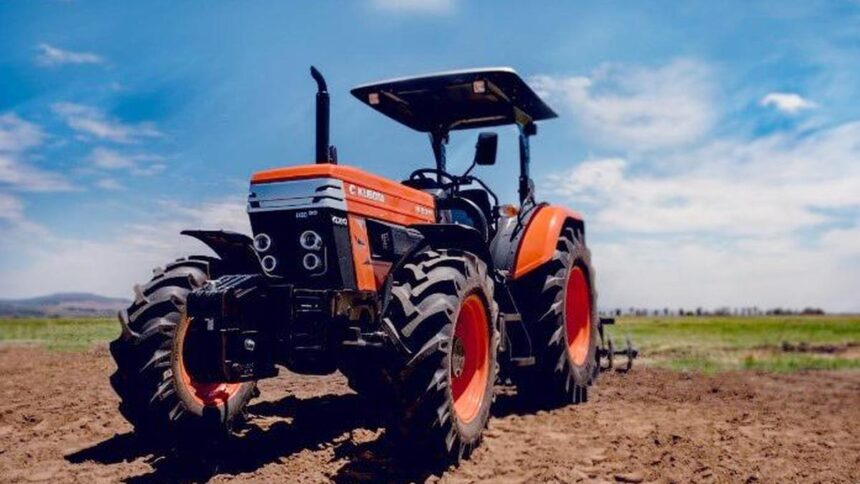
India’s Escorts Kubota expects to increase its market share in a weakening domestic tractor segment in fiscal 2027, its finance chief said, as it looks to new models, dealer expansion and strength in northern India to help it weather the slowdown.
The tractor maker, majority-owned by Japan’s Kubota Corp, expects domestic sales to be flat or slightly higher even as industry volumes decline marginally, Chief Financial Officer Bharat Madan told Reuters.
India’s June-September monsoon rainfall came in 12.6 per cent below normal, its biggest shortfall since 2015, hurting agricultural activity in key tractor markets, while a global rise in commodity costs has squeezed manufacturers’ margins and prompted price increases.
Escorts’ domestic sales fell 16.2 per cent in September and 10.9 per cent in October, though April-October sales remained 6.2 per cent higher.
“We should be able to continue to outperform the industry for the balance of the year,” Madan said, without giving a market-share target.
Escorts’ domestic market share rose 48 basis points to about 12.2 per cent in the second quarter, as its volumes increased 0.9 per cent while industry sales fell about 3 per cent.
The company’s new tractors under its Powertrac, Farmtrac and Kubota brands have filled portfolio gaps, while more launches and dealer expansion are planned, Madan said.
In addition, demand has held up better in northern India, where the company has a stronger presence, than in the monsoon-deficient western and southern regions, he said.
Rising costs from the war in West Asia have weighed, with Escorts planning to raise tractor prices by about 3 per cent to 3.5 per cent from mid-November, varying by model.
“Our main issue will be to protect volume,” Madan said, adding that Escorts may absorb some remaining cost pressures rather than risk hurting demand with steeper price hikes.
The company recently cut its industry forecast to a marginal single-digit decline from mid-single-digit growth. Rival Mahindra & Mahindra also cut its forecast to flat from 5 per cent growth, citing weak rainfall and pressure on rural purchasing power.
Published on November 12, 2026