



Six years ago, the spread of the Covid-19 virus resulted in pressing uncertainty that forced the government to act fast. This resulted in a series of high-stakes interventions, ranging from the world’s most stringent lockdown to massive digital-first welfare and vaccination drives, that frequently and unintentionally exacerbated existing structural inequalities. Independent research and field data paint a picture of systemic exclusion, displacement, and the suffering of,,, tribal communities, and those entrenched in the. If anything, it taught us that blunt policy instruments could inflict deep wounds on our most vulnerable.
The war has triggered global energy conservation measures due to supply chain disruptions in the Strait of Hormuz. This has included measures like unscheduled power cuts to residential areas or the mandated closure of small-scale industries in some countries. These broad restrictions also risk exacerbating existing structural inequalities. Pakistan and the Philippines have implemented four-day workweeks to curb fuel consumption, with Pakistan even closing schools for two weeks.
Such measures, when sustained, carry immense weight in the long term, as evidenced by reports by and the. It can result in a blow to human capital that will take decades to repair.
India’s own Covid-19 school lockdowns of 82 weeks were the second-longest school closures in the world, resulting in millions of children, particularly in rural and underprivileged areas, losing close to two years of foundational learning. Learning poverty is defined by the World Bank as the inability of a child to read and understand a simple text by the age of 10. About 57 per cent of children in India were learning-poor in 2019, and this.
India has significantly to account for some percentage of potential disruptions to imports. India has also quickly diversified its crude oil and natural gas procurement to offset this disruption. On the other hand, through the Essential Commodities Act, the government has: Category 1 (households, transport, and production), which will receive 100 per cent supply; Category 2 (fertilizer plants), receiving at least 70 per cent; and Categories 3 and 4 (industrial and commercial users) both to receive approximately 80 per cent.
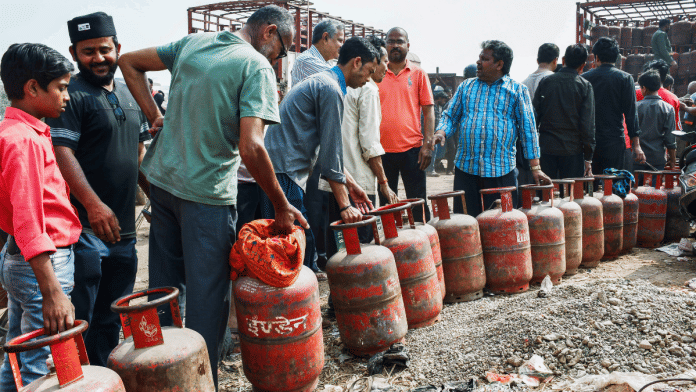
India’s informal sector employs over ninety per cent of its workforce. For them, energy is not a luxury but the difference between a day’s wage and hunger. suggest that street vendors are already suffocated by the restrictions on LPG and are resorting to purchasing cylinders from the black market. With black market prices also rising, the acute risk of shutting down their business looms over their heads.
This situation highlights the need for nuance in the government’s response, as well as communication, during this crisis. Prioritising LPG for domestic use is a well-intentioned move, but it could run the risk of affecting millions of food vendors—especially informal ones—and their families who rely on their daily earnings. Similarly, industries involving ceramic manufacturing, wood panelling and lamination, fertilisers, chemicals, and textiles are reportedly severely affected by the government measures.
The crisis in West Asia highlights our dependence. This provides us with an opportunity to pivot towards a more resilient and sustainable path.
In the short term, the government must work toward:
Providing transparent information, especially during such shocks, is an essential first-order priority that will aid in building trust among citizens and businesses, and prevent panic and non-cooperative measures like hoarding or black marketeering.
The discussions held by the people in charge, such as the executive committee of the Ministry of Petroleum and Natural Gas, should be made publicly available. Dialogues with working groups such as industry associations like the National Restaurant Association of India (NRAI), several industrial clusters, GAIL, etc., should be consistently held.
The Ministry of Petroleum and Natural Gas (MoPNG) could subsidise the fixed costs of installing electric or induction stoves in restaurants, or subsidise procurement.
Current schemes like PM SVANidhi do provide working capital, but during an energy crisis, this capital is quickly used up by rising fuel and transport costs. The central government has a variety of schemes for different industries. Introducing a “Green-Transition Top-up” for existing beneficiaries of these schemes, such as an additional interest-free tranche (e.g., Rs 5,000 — Rs 10,000) specifically for purchasing induction stoves, solar lanterns, battery-operated carts, or other relevant technologies, could be considered. This shifts their dependency away from volatile LPG and petrol without requiring them to dip into their daily earnings.
Rather than blanket cuts to select industries, the government could use platform-based tracking for the national gas grid to identify needs and reroute supply to higher-priority economic zones (such as important industrial clusters) in real-time. Incentivising shifts in high-consumption activities to “solar hours” via Time-of-Day (ToD) tariffs—as seen in Bihar and Assam—can reduce the peak load without driving or forcing businesses to shut down.
This early-stage crisis could transform into an opportunity to accelerate India’s tall-order energy ambitions to stock 500 GW of green energy by 2030, while realising energy diversification in a time of unprecedented geopolitical volatility. The Centre’s current move to expand its crude import base from 27 to 40 countries is a necessary immediate shield. Now is also the time to invest in the R&D of LPG substitutes like Dimethylether (DME), which has shown.
India must accelerate the deployment of Decentralised Renewable Energy (DRE). States like Karnataka, Maharashtra, and Himachal Pradesh are already in such decarbonisation. By equipping schools, primary health centres, and rural clusters with independent solar-plus-storage systems, India can ensure that energy austerity at the national level does not translate to service blackouts at the local level. This will serve to lessen reliance on CNG cylinders for domestic usage in the long run.
The cost of transition away from traditional energy sources and response to energy shocks must also be decentralised. States, and ultimately cities, must include these subjects in their budgets. Cities have the most granular information about the informal sectors of industry that thrive within and around them. Decentralising these efforts can allow for a more contextual understanding of their needs and an opportunity to optimise government response.
States must move from ambition to execution on the green economy front. India’s green economy has the potential to create in the energy transition alone. In a crisis, the focus should shift toward building infrastructure and providing incentives that enable local energy autonomy, rather than merely managing scarcity.
This energy shock, like all the previous ones, can serve as a great opportunity to build an energy system that is smarter, self-sufficient, and more resilient to global shocks.
India must ensure that while the world tightens its belt, India’s schools remain open without fear, its factories remain humming, and its informal workers remain employed. We must outgrow the crisis and not just survive it.
Kartik Saboo is a public policy specialist with over a decade of global experience in governance, social impact, and development. He is the founder of The Metropolitan Institute.
Srikar Nagasubramanyam is a public policy specialist and researcher with expertise in global conflict studies and international development. He heads policy and research at The Metropolitan Institute.
Angelica P. Zocchi is a public policy and international development professional whose work focuses on environmental governance, urban development, Indian politics and macroeconomics, and state capacity in emerging markets.
Views are personal.
(Edited by Theres Sudeep)

