



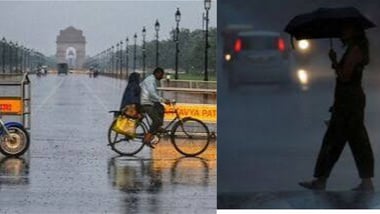
Delhi has reportedly bucked the broader rainfall trend this monsoon, receiving 8% more rain than its seasonal normal as of September 16, even as neighbouring regions recorded rainfall deficits. The unusual contrast has raised the possibility that changing weather patterns linked to a strengthening El Niño, along with climate change, may have influenced the capital’s rainfall, according to a report by Times Of India.
While recorded above-normal , its meteorological subdivision, Haryana, received 23% less rainfall, while northwest India as a whole was 10% below normal.
The contrast becomes more striking when district-level rainfall is considered. Delhi sits close to a large belt of rainfall-deficient districts stretching across and Punjab. Neighbouring Sonipat has recorded 32% less rainfall than normal, while Rohtak is at a 47% deficit. Further north, Hoshiarpur has received 53% less rainfall and Kapurthala is facing a 69% shortfall.
More than 30 districts across Haryana, Punjab, Rajasthan, Himachal Pradesh and western Uttar Pradesh have recorded significant rainfall deficits this season.
One possible explanation lies in the changing movement of low-pressure systems originating over the Bay of Bengal, the report noted. This season, these systems appear to have followed a different trajectory, potentially influenced by El Niño conditions, bringing more rainfall towards Delhi-NCR.
The interaction of these systems with western disturbances may have further boosted rainfall over the capital, helping Delhi emerge as an unusual pocket of above-normal rainfall amid a wider rain-deficient region.
Meanwhile, India could face an extended disruption to its monsoon as a potentially record-strength El Niño develops, while unusually warm Pacific Ocean temperatures are also raising concerns about an exceptionally hot summer in 2027, The Telegraph reported.
The climate pattern is expected to reach its peak sometime between late 2026 and early 2027. However, scientists say its influence could continue even after the phenomenon begins to weaken, as heat accumulated in the Pacific can take months to dissipate. This could have prolonged effects on India’s monsoon, temperatures and wider weather patterns.
The outlook comes as India’s monsoon rainfall is already 13% below normal, according to the report. About 40% of the country has received rainfall at least 20% below the average, potentially creating risks for agricultural output and the wider economy.
The UK Met Office said on Friday that the El Niño event now taking shape could become the strongest observed since the 1800s. Some projections indicate that sea surface temperatures in the Pacific could rise to more than 3°C above the average by late 2026 or the beginning of 2027.
“I have never seen an El Niño signal this intense in our forecasts,” Adam Scaife, head of the long-range forecasting division at the UK Met Office, said in a statement on Friday.