



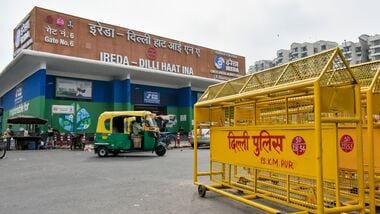
Delhi CJP protest: Metro stations were shut, liquor shops were closed, more than 250 trains were cancelled, a traffic advisory was issued, internet services were temporarily suspended and markets across the national capital, including Khan Market and Connaught Place, were also affected — all this to thwart a protest led by the Cockroach Janata Party (CJP) against Chief Election Commissioner (CEC) Gyanesh Kumar.
Kumar has been under fire after an Indian Express investigation alleged irregularities in the Special Intensive Revision (SIR) of the electoral roll and flagged 14 objections raised by Kumar’s deputies over 10 months. These objections included the change in — where the voter list is published.
To protest against Kumar, the CJP and several political parties organised a protest at Jantar Mantar on October 10, prompting the Centre and police to take pre-emptive steps to avoid a July 20-like situation (when the CJP protest over NEET turned violent).
But how much do these restrictions on the metro, internet, railways, and markets cost, and who pays for them?
The cost of these curbs would be passed on to the public, the Times of India reported, while sharing a breakdown of the estimated losses incurred due to the October 10 restrictions, which the Opposition has widely labelled a “shutdown.”
The lockdown of the national capital could reach around ₹91 crore for the weekend, the TOI reported. It stated that when a capital city is locked down for one protest, shopkeepers, workers and commuters pay for the loss.
The report claimed that the shutdown of the Delhi metro may cost around ₹0.52 crore to ₹1.30 crore, while the closure of the Connaught Place and Sadar Bazar market for just one day may amount to roughly ₹31.8 crore.
Dry days (liquor shops shut for one day) may cost around ₹58.5 crore. All this roughly adds up to ₹90 crore-91 crore loss in this weekend alone, the TOI report claimed.
Meanwhile, Traders Association President Sanjiv Mehra told ANI that a single day’s closure can cause losses of . “Perishable goods, such as fruits and groceries, add to the losses,” he added.
Delhi Metro closed 45 stations from 9 pm on Friday till 6 pm on Saturday for security reasons, an advisory said.
Internet services were suspended within a 4-kilometre radius of Jantar Mantar from 10 pm on October 9 to 10 pm on October 10. However, the Hindustan Times reported on Sunday that the internet suspension was extended to at least eight places across Delhi that had been designated astemporary jails for Saturday’s protest.
The order, dated October 9 and approved by Union home secretary Govind Mohan, suspended mobile internet within 500 metres of each site from noon to 10pm on Saturday, the report added.
Liquor shops across Delhi were ordered to remain closed on October 9 and 10 as a preventive measure.
Railway services were also disrupted, with several trains scheduled to arrive at or depart from New Delhi and Hazrat Nizamuddin railway stations between 4 am and 2 pm on Saturday reported cancelled.
Hotels, lodges, guest houses and dharamshalas were checked as part of the preventive security exercise. Police are also issuing appeals from various mosques and temples, urging people to maintain peace.
No such restrictions were announced for October 11 as the CJP decided to continue its protest against CEC Gyanesh Kumar.