



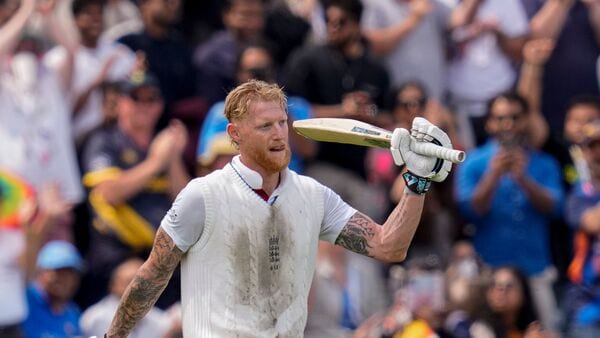
It’s hard to keep English cricketer Ben Stokes out of the game. Or, the news. Three months after his shock retirement from international cricket, Stokes is at the forefront of a debate that has happened before—and will happen again, and again, in the years to come.
In a cricketing landscape that is seeing the march of club cricket dust out and redraw all kinds of boundaries, Stokes is the current lightning rod of the tradeoff between club and country, self-interest and national interest.
After walking away from international cricket, the 35-year-old is keen to hit the relatively more lucrative stops of T20 club cricket. First up is Australia, in December and January. Here, Stokes has signed a contract worth, at current exchange rates, reportedly about ₹3.3 crore for 10-13 matches. This is about a third of what he is believed to have last made playing for England round the year, across many countries.
Next up, according to The Guardian, Stokes is lining up T20 leagues in Pakistan and the US. But the English cricket board might not give him a no-objection certificate (NOC). Stokes needs this NOC as he is contracted to an English county, Durham.
The Pakistan and US leagues operate in a window that overlaps with the English domestic season, and the board doesn’t want to let go off a prime draw like Stokes. It fears that giving Stokes an NOC would set a precedent—more English players will selectively abandon English county cricket for global T20 leagues that effectively pay more.
The NOC is English cricket’s power play, a lever to control its players. But with a marquee name like Stokes, it can’t be as blunt as the Indian board, which simply doesn’t allow Indian players to play in other T20 leagues till they have retired from the national team and the Indian Premier League (). The English cricket board is yet to decide on Stokes’ participation in the other T20 leagues.
The last word on the Australian cricket board’s plan to bite the bullet and start privatizing teams in its T20 franchise league remains. If it goes through with that plan, announced last month, it would be the last of the four major cricket countries to do so, the other three being India, Australia and England. That plan has divided stakeholders, resulting in the resignation of the Cricket Australia (CA) chair on 28 September.
The string that joins these disparate conflicts, stances and responses is the state of flux cricket finds itself in. Private money is chasing club-based T20 cricket. The Indian cricketing board acted first, with the IPL. The past three years have seen other boards take to private capital, albeit reluctantly, to stay relevant.
Their response is opening many fault lines—between boards of different countries, between a board and its state affiliates, between a board and its players.
National cricket boards, to whom players are affiliated, sit atop the superstructure of their T20 leagues. For all their independence, there is a hierarchy even among them.
The Board of Control for Cricket in India (BCCI) controls Indian cricket, but it also wields a sizeable influence on world cricket. In 2008, it was the first to embrace club-based T20 leagues, with the IPL. Australia followed in 2011, with the Big Bash League (BBL).
But the difference in scale is massive. A good measure is the broadcasting deal, the main revenue component of T20 franchise leagues. The current media deal for just the IPL fetches the BCCI about ₹9,678 crore per year. The current annual CA deal for the Big Bash League, as well as for all international matches played in Australia, is ₹1,470 crore.
That naturally influences player salaries. For the 2026 season, each IPL team had a total player budget of ₹146 crore, against about ₹21 crore in the BBL. Similar differentials exist between the IPL and The Hundred (a 100-ball format) in England and the SA20 in South Africa.
This also gets reflected in the financial position of the respective cricket boards—and shapes their choices. The Indian board is a profit machine, the other three boards live hand to mouth.
In 2024-25, the BCCI’s revenues amounted to 1.7 times that of the boards of England, Australia and South Africa combined. Further, it generated a net surplus that was about 75 times the other three boards combined.
Cricket Australia can do little about its financial gap with the BCCI, or of the BBL with the IPL. But increasingly, in the T20 league context, it is compelled to think about its distance to England and South Africa. That’s because these two countries have privatized teams in their short-format leagues—South Africa in 2023 and England in 2025.
That privatization led to a windfall for the boards, with the English one receiving about 520 million pounds (about ₹5,700 crore).
Player salaries increased. In The Hundred, the budget for each men’s team increased from 1 million pounds in 2023 to 2.05 million pounds (about ₹26 crore) in 2026. Similarly, SA20 had a team budget of ₹21 crore in 2025—almost the same as in the BBL.
In a podcast interview earlier this year, Australian cricket captain Pat Cummins spoke about the “tension point” among Australian players in turning down the opportunity to play in The Hundred and instead playing two tests against Bangladesh in August 2026.
If players could choose leagues, and followed the money, they could well opt for leagues other than that of their own country. Cummins himself has not played in the BBL since 2019, but has played in five seasons in the IPL thereafter. One reason is the BBL season runs almost concurrently with Australia’s home season for test matches.
Cummins earns about $AUS 3 million (about ₹20 crore) from CA. This is part of the current deal, where CA shares about 27.5% of its revenues with Australian players contracted at various levels.
But there’s unrest brewing in a shifting cricketing landscape. The feeling among Australian players is they could be earning more, especially as they are seeing peers from South Africa and England, or even full free agents, do so. This can lead to Australian players making choices that are awkward for CA.
In this backdrop, CA said it would privatize one BBL team. That process began in September, with a call for expressions of interest to buy 100% in the Melbourne Renegades. As in England and South Africa, such a move would give CA more funds to distribute among players and inject into the sport. A private owner could also lift the team’s finances and profile. But not every stakeholder is on board.
In India, cricket governance is centralized, and state associations toe the BCCI line. In Australia, state associations have a voice. Two of the six state associations, New South Wales and Queensland, have rejected privatization. New South Wales was also the home association of CA chair Mike Baird, who resigned on 28 September.
These two state associations argue that private owners will prioritize profits over re-investing into local pathways and community cricket. While they recognize the need for more finances, they feel this can be raised even in the current structure.
Unlike Australia, England had an easier time with their county affiliates. In The Hundred, the English board sold 49% of the eight teams to private investors via a bidding process.
That resulted in a combined valuation of the eight teams of about £975 million (about ₹10,700 crore)—about 32% less than what just one team in the IPL, Rajasthan Royals, was sold for this May. It transferred the remaining 51% to the eight counties, some of whom sold additional stakes.
South Africa is structured along the same lines as the IPL, with a 100% franchise model for its six teams. This approach transferred the financial risk to private backers while securing upfront expansion fees.
This financial strengthening of the English and South African cricket boards in this manner plays into the BCCI’s hands. All six teams in SA20, and four of the eight teams in The Hundred, trace their ownership to IPL teams. Given the leverage the BCCI has over them in the IPL, it also implicitly gives the BCCI some influence over other leagues, especially in the context of how the leagues evolve and compete against each other.
In all this churn, the BCCI is sitting pretty. Because of India’s vast consumer market, cricket’s appeal and media landscape, the BCCI does not need external capital to keep the IPL thriving. It uses that unfettered power in ways that can be seen as self-serving at best and monopolistic at worst.
Take player participation. It does not allow Indian male players from participating in overseas T20 leagues till they retire from international cricket and the IPL. This May, 35-year-old Vijay Shankar did just that, prompting the BCCI to weigh changes.
At the same time, with its considerable financial and soft power, the BCCI draws overseas players. Some other countries have player associations, notably England and Australia, and they have negotiated concessions from their boards to play in the IPL.
Cricketers today are earning significantly more than they were in a world without T20 leagues. Take Indian captain Shubman Gill, who played all three formats for India in 2025—9 tests, 11 ODIs and 15 T20s.
As one of the three Grade A cricketers contracted by BCCI that year, he reportedly earned a retainer of ₹5 crore. Then, there were match fees: ₹15 lakh per test, ₹6 lakh per ODI and ₹3 lakh per T20. Since he played 9 tests that year, he also earned ₹45 lakh per test as incentive. Gill’s total earnings from playing for India: ₹11.5 crore, over 71 match days.
The same year, Gill also earned ₹17.6 crore from the Gujarat Titans in the IPL, for 15 playing days. In other words, Gill earned 53% more from club cricket while spending about one-fifth the time on the ground.
The difference is even more acute for leading T20 proponents from other countries. Take Heinrich Klaasen of South Africa, who retired from international cricket in June 2025. In 2025, if he played the same number of matches for South Africa as Gill, he would have earned about ₹4 crore. That year, he earned ₹23 crore from the IPL, and reportedly about ₹7 crore from playing in The Hundred, SA20 and MLC.
That’s the kind of financial differential, along with tradeoffs, that players are grappling with at two levels. For players in the national side, it’s mostly about club or country. For those not in the national frame, it’s about whether to keep ties with a club in the home country and be governed by rules of the home board (Ben Stokes), or become free agents and play in any T20 league (Alex Hales and Jason Roy of England, or Trent Boult of New Zealand).
Boards don’t allow players a complete freedom of choice, especially the BCCI. Thus, from a player’s perspective, they are not maximizing the earning potential of a finite career.
For example, both Virat Kohli and Rohit Sharma, former India men’s cricket team captains, currently only play the IPL for two months and the occasional one-day matches for India. They could easily slot the BBL or The Hundred into their schedules for more gametime and earnings. The same is the case with other Indian players, who have no option but to abide by the BCCI’s hierarchy of IPL, national cricket and domestic cricket.
Compared to their counterparts in other professional sports, IPL teams spend a smaller portion of their revenues on player salaries. In the five main European football leagues, for example, total player salaries amounted to 54-80% of combined club revenues. In 2024-25, for both Mumbai Indians and Royal Challenger Bengaluru, this was 21-22%.
Players are watching. The opportunities in T20 leagues are multiplying, though none is as lucrative as the IPL. The overlap in team ownership between the IPL and other leagues might also lead to a clamour from owners to allow Indian players to play in those leagues. The advent of T20 leagues changed world cricket. A lot more could still change.
is a search engine for public data