



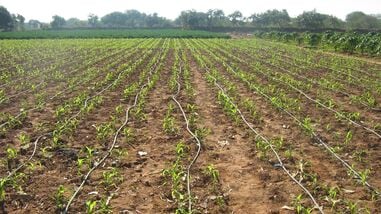
New Delhi: The Centre has asked states facing water shortages to rethink their rabi crop plans and align sowing with available water and soil moisture, as drought-like conditions in parts of Maharashtra, Karnataka, Telangana and Andhra Pradesh raise the risk of crop loss.
Addressing the two-day National Agriculture Conference–Rabi Campaign 2026 in New Delhi on Monday, agriculture minister Shivraj Singh Chouhan said water availability should be the primary consideration when deciding which crops to sow.
The government’s focus comes as below-normal rainfall and water shortages raise concerns over irrigation availability in some regions.
Maharashtra, Karnataka, Telangana and Andhra Pradesh are among the states facing drought-like conditions, Chouhan said. He expressed concern over Maharashtra and Karnataka, with nearly two-thirds of Maharashtra’s area affected by drought, according to the agriculture ministry.
Maharashtra has at the state level, while drought conditions continue to prevail in Karnataka, Chouhan said. A central team will visit Karnataka on 3 October to conduct a ground assessment of the drought situation, while another team will be sent to Maharashtra, he added. Chouhan said he would also visit the affected states.
The drought concerns come against the backdrop of below-normal rainfall nationally. Chouhan said the deficit was not yet severe enough to affect water availability across the country, but flagged shortages in some states as a concern requiring advance planning.
The south-west monsoon has brought cumulative rainfall of 755.7mm from 1 June to 27 September, 12% below the normal 857.5mm, according to the India Meteorological Department data.
The uneven rainfall has . Farmers had sown 110.39 million hectares as of 18 September, down 1.3% from a year earlier, or 1.5 million hectares, according to agriculture ministry data. The decline was concentrated in several major crops, including rice, maize, sugarcane and cotton.
With rabi sowing approaching, the Centre wants states to match crop choices with available water rather than rely on conventional cropping patterns. The agriculture ministry has asked states to assess water availability and soil moisture before finalizing crop plans and promote less water-intensive crops in areas facing shortages.
The development assumes significance because rabi foodgrain production accounted for 48% of India’s total foodgrain output of 376 million tonnes in 2025-26, according to agriculture ministry data.
The minister has also called for separate crop planning for rainfed and irrigated areas to reduce the risk of crop failure amid inadequate moisture and limited irrigation resources.
The Centre has asked states to prioritize pulses and oilseeds in areas with limited water availability. These crops generally require less water and could help states diversify cultivation while supporting national self-sufficiency goals. Areas left fallow after paddy cultivation could also be brought under pulses and oilseeds during the rabi season, according to the agriculture ministry.
The government is also pushing states to strengthen procurement arrangements alongside crop planning. Chouhan said central agencies such as the National Agricultural Cooperative Marketing Federation of India (Nafed) and the National Cooperative Consumers Federation of India (NCCF) could procure pulses and oilseeds directly from farmers if state governments do not undertake procurement in time, provided states facilitate the process.