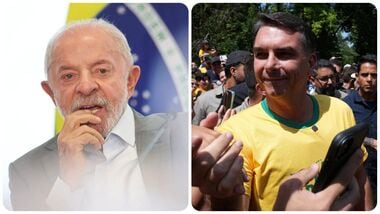
Just days before his 81st birthday, Brazilian President Luiz Inácio Lula da Silva got a new smartphone — reportedly his first ever — as he steps up efforts to connect with voters through social media ahead of a closely watched presidential runoff.
“I’m becoming the king of selfies, a real internet user,” Lula told supporters at a recent rally in Brasília, signalling a shift in how the veteran left-wing leader is approaching political campaigning.
As Reuters reported, Lula’s smartphone debut comes at a time when social media platforms such as TikTok, Instagram and are increasingly shaping Brazil’s political landscape.
The ability to build a large online following and convert digital influence into votes has become a powerful electoral asset, particularly for younger candidates.
For , who has spent decades building his political identity through trade unions, grassroots mobilisation and mass rallies, adapting to this new environment could prove crucial as he seeks an unprecedented fourth presidential term.
The growing influence of digital campaigning was evident in congressional elections held alongside the first round of this month’s presidential vote. Several younger candidates with strong social media followings performed exceptionally well, according to the report.
Lula’s opponent in the runoff is , the son of former president Jair Bolsonaro.
At 45, Flávio has been reaching voters through his own YouTube channel and has emerged as a formidable challenger after topping the first-round vote, surprising pollsters, Reuters reported.
Lula, a former shoeshine boy who went on to become a metalworker, trade union leader, and an internationally recognised left-wing politician, first ran for president in 1989. His political communication has historically relied on personal connections with workers, grassroots organisations and supporters at large public gatherings.
Ana Elisa Silva, the 21-year-old law student from Minas Gerais, has joined Lula’s inner circle to help him navigate the social media landscape following his disappointing first-round performance, according to Reuters report.
Silva told Reuters that the transition required adjustments for a politician who has openly acknowledged his dislike of mobile phones.
“This experience remains important, but it needs to align with changes in how people consume information, especially young people.”
The growing prominence of politicians who have built their own digital audiences marks a further evolution in electoral campaigning, according to Máximo Zaldívar, regional director for Latin America and the Caribbean at the International Foundation for Electoral Systems.
Politicians once approached personalities to endorse their campaigns. Increasingly, however, candidates themselves are building audiences and political influence through their online content.
“The influencer has their own political capital,” Zaldívar said, referring to the followings accumulated across platforms. “That’s what they bring to the table and no politician can compete with that.”
Ferreira exemplifies this trend. A staunch supporter and the son of an evangelical pastor, he has nearly 25 million Instagram followers — equivalent to more than 10% of Brazil’s population.
Conservative lawmaker Julia Zanatta, 41, who has more than one million followers and won over half a million votes in this month’s election, said success on social media requires consistency and a willingness to communicate without being overly concerned about criticism.
“I never thought about whether I’d reach more people or if I’d displease anyone,” she said, as per Reuters.
With inputs from Reuters.