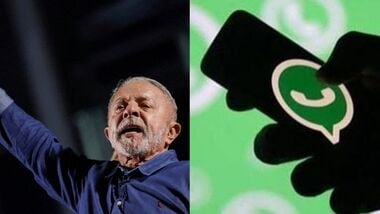
Brazilian President Luiz Inácio recently won the election, securing his fourth term against his right-wing challenger, Flávio Bolsonaro. Lula received 51.79% of the vote and became the first president since the country’s return to civilian rule in 1985 to win after losing the first round of voting. Lula’s victory and unprecedented comeback are being attributed to a social media platform: WhatsApp.
According to reports by the BBC and The New York Times, a WhatsApp channel was created to mobilise his supporters, with his allies delivering one of the most unlikely comebacks in recent Brazilian politics and turning the tide in his favour.
At a time when many in Rio de Janeiro doubted whether the incumbent president would be able to reverse the result, a channel, “Lula’s Army,” emerged and rapidly grew to 10.8 million followers. The channel was led by Congressman André Janones, who encouraged supporters to share videos, promote hashtags related to the president, and recruit new voters.
Its sharp rise between the two voting rounds stood out because it suggested a shift in Brazil’s established online political landscape.
For years, supporters of former President and other conservatives were widely viewed as having the upper hand in digital mobilisation, particularly through WhatsApp and Telegram. The emergence of the WhatsApp channel supporting Lula’s campaign reportedly convinced undecided supporters that Brazil’s left had found a way to compete in the digital space.
The shift has been remarkable, particularly because, since Jair Bolsonaro’s 2018 election victory, social media has played a crucial role in Brazilian politics, with WhatsApp networks becoming a defining feature of political campaigning.
Voter participation rose by almost three million from the first round to the runoff, an unusual trend in Brazil, where absenteeism typically increases after the initial vote. The absentee rate fell to its lowest level in a Brazilian presidential election, suggesting Lula had effectively encouraged his supporters to cast their ballots.
Posts on the Lula’s Army channel often provided supporters with pre-written messages to forward to friends and family. They also assigned specific online tasks aimed at increasing the president’s visibility across social media platforms.
The congressman regularly urged his “troops” to amplify the latest campaign video or push a new hashtag into wider circulation.
“Guys, urgent!”, “Don’t go to sleep yet”, “No food before the mission!” and “I have one more task before you’re dismissed” were among the instructions.
On the eve of the election, Janones hosted a 24-hour live event, dubbed the “turnaround livestream”, even as polls continued to indicate a victory for Lula’s rival. That strategy worked, despite concerns among Workers’ Party members that the congressman’s often confrontational social-media style could undermine the more moderate image they hoped to project for the incumbent president.
Apart from the aggressive social-media campaign, here is a list of other factors that helped turn the tide in Lula’s favour:
1. Protecting Brazil’s democracy by keeping Bolsonaro out: Lula’s historic victory defied a recent trend across Latin America, where voters have moved to the right and elected politicians allied with US President . For many Brazilians, the vote was about more than returning da Silva to power, The Wall Street Journal reported. They viewed it as a way to keep the Bolsonaro family out of office and safeguard Brazil’s hard-won democracy.
2. Persuasion: His surprise victory on October 25 came after the incumbent president persuaded millions to cast their votes in the second round, especially those who skipped voting in the first round. Lula’s Workers’ Party asked for voting hours to be extended on Sunday after reports that some local governments had cut bus services used by poorer voters, who generally back the president.
His campaign also stepped up efforts to reach voters who had not cast ballots in the first round. It portrayed Bolsonaro’s proposed spending cuts as a threat to public services and welfare benefits.
3. Shifting focus from Trump: After suffering a setback in the first round of voting, Lula shifted his campaign focus from warnings about Washington’s interference in Brazil’s election to voters’ economic frustrations. The Wall Street Journal reported that Lula vowed to increase payments under the Bolsa Família welfare programme, backed a shorter working week without a pay cut, and pledged broad debt relief for financially struggling households.
4. Hardened stance on crime: He also hardened his stance on crime and broke with his party’s traditional position to support prosecuting 16-year-olds as adults for particularly serious crimes.