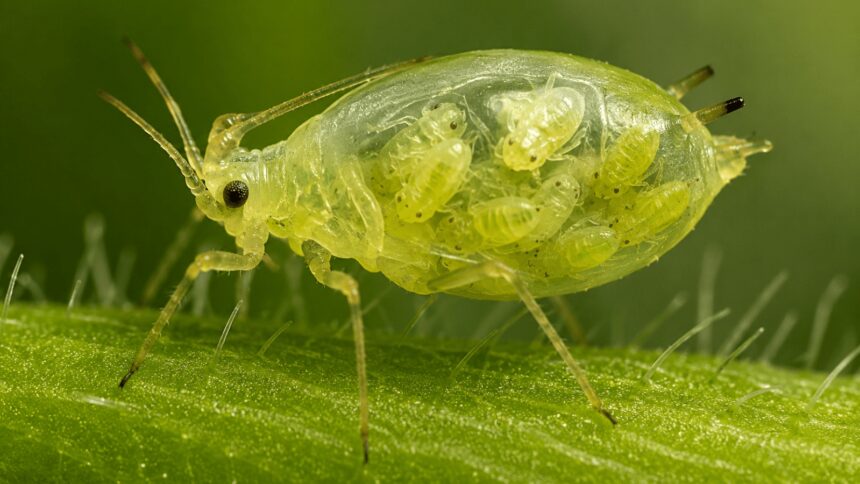
Imagine being born already carrying the next generation inside you. While it may sound like science fiction, but for tiny sap-sucking aphids, this is real biology. These pear-shaped insects, also known as plant lice, are major agricultural and garden pests that feed on plant sap.
Some aphid species are famous for a reproductive phenomenon so bizarre that scientists call it “telescoping generations.” In simple terms, a female aphid can be born with developing daughters already inside her, and those daughters may themselves already contain the beginnings of the next generation. Yes, that means three generations can exist inside one tiny insect at the same time. A pregnant mother carrying pregnant daughters.
Unlike many animals that reproduce sexually, aphids often rely on parthenogenesis during favourable conditions, essentially producing offspring without mating. This allows female aphids to reproduce rapidly, creating genetically near-identical daughters without waiting for fertilisation. Because the embryos begin developing before the mother even gives birth, the next generation gets a dramatic head start.
Think of it like a biological nesting doll. A grandmother aphid carries a daughter, and that daughter may already be carrying the earliest form of her own offspring. However. it’s not literal three full-grown generations stacked like Russian dolls, but an overlapping developmental stages across generations.
This reproductive shortcut helps aphids multiply at astonishing speed, which explains why a few insects on your rose plant can suddenly turn into a full infestation.
Why would evolution create something so strange? Speed. Aphids are tiny, vulnerable, and delicious to predators like ladybugs, lacewings, and parasitic wasps. They also depend heavily on and plant availability. So reproducing quickly becomes a survival advantage.
Instead of spending time finding mates and waiting through long reproductive cycles, aphids can rapidly clone themselves when conditions are ideal. Some species can produce multiple generations in just weeks.
But this reproductive superpower is not permanent. When environmental conditions worsen—such as colder weather or food stress—many aphid species switch back to sexual reproduction, which helps increase genetic diversity and improve long-term survival.
So while the “pregnant before birth” claim sounds outrageous, it is less a biological glitch and more one of nature’s weirdest efficiency hacks!