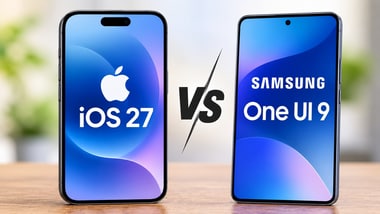
Apple’s iOS 27 and Samsung’s One UI 9 bring new features and improvements to smartphones, but they take different approaches.
While Apple focuses on performance, a simpler interface and a connected ecosystem, Samsung offers more customisation, multitasking options and AI-powered tools.
Apple released iOS 27 on September 14 for compatible . The update brings a redesigned Siri AI experience, improvements to the Liquid Glass interface and faster app performance.
Samsung’s One UI 9 is being introduced first on its latest Galaxy foldables before expanding to other supported devices.
But which operating system offers a better experience? The answer depends on what users want from their smartphones. Here is how the two compare on performance, customisation, AI features and multitasking.
The biggest difference is the level of control each operating system gives users.
Apple follows a more controlled approach, allowing users to personalise parts of the interface while maintaining a consistent design. Samsung gives users more options to change layouts, organise applications and manage multiple windows.
Apple has highlighted improvements in the speed of everyday tasks with iOS 27.
According to the company, apps launch up to 30% faster, new photos load in the Photos library up to 70% faster, and transfers are up to 80% faster. These are Apple’s own performance figures, published in its official iOS 27 announcement.
Apple has also improved itsdesign, making interface elements easier to read. A new slider allows users to adjust transparency, from a clearer appearance to a more tinted look.
says One UI 9 brings smoother navigation and improved interactions when switching between screens or running applications together.
Samsung reportedly offers more options for users who want to run multiple applications at the same time.
One UI 9 supports two-way and three-way split-screen views on compatible devices. This allows users to open multiple applications side by side instead of repeatedly switching between them.
Samsung has also improved its DeX experience, allowing users to arrange application windows by snapping them to different parts of the screen.
The Z Flip8 receives additional cover-screen features, including options to add, remove and rearrange widgets without opening the phone.
These features are particularly useful for people who use their smartphones for work and productivity. However, some of these improvements are designed specifically for supported foldable devices and are not available across every Galaxy phone.
Apple’s iPhone offers a simpler multitasking experience, with fewer options for managing multiple application windows simultaneously.
Apple’s iOS 27 introduces a more capable version of Siri, designed to understand personal context, respond to conversational requests and perform more actions across supported applications.
According to Apple, Siri can use information from messages, emails and photos to help users find relevant information. It can also understand what is displayed on the screen and respond to questions about it.
has expanded AI with features such as Now Nudge, My FanCam, Photo Assist and Now Brief.
Now Nudge provides suggestions based on what users are doing on their phones. My FanCam allows users to select a person in a recorded video and automatically keep them centred in the frame.
Photo Assist lets users describe photo edits using voice commands, while Now Brief provides personalised daily updates.
Feature availability on both platforms depends on the device, language and region.
Apple has an advantage for users who already own multiple Apple products. Features such as AirDrop, Handoff and Universal Clipboard make it easier to share files and continue tasks across compatible , iPads and Macs.
Samsung offers integration across its phones, tablets, watches and earbuds. It also provides connectivity with Windows computers, making it a useful option for people who work across different platforms.
Neither operating system is a clear winner across every category.
iOS 27 focuses on faster everyday performance, a more capable Siri and a consistent experience across its devices.
Samsung’s One UI 9 offers more flexibility, split-screen multitasking and additional AI features, particularly on its latest foldable phones.