



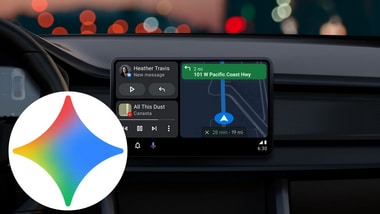
on Android Auto is getting an update in which users will now be able to customise their ‘driving avatar’ directly from the display of their cars.
The blue arrow navigation icon on Maps was an old feature on smartphones but has been made available for Android Auto for around a year. Earlier, when customising your chosen icon for navigation, it had to be done via your phone.
With the latest update, users will be able to chose their driving avatar on the screens of their cars itself.
On Google Maps on , a ‘driving avatar’ setting appears alongside home/work alert settings where one can tap to pick the preferred avatar and colour of choice.
As per a report by 9to5google, this feature will go live with a server-side update.
Android Authority reports that it spotted the feature for the first time in February when the company was preparing to release the feature. It also said that the option was available on devices running Android Auto 17.8.163744-release.daily and Google Maps 26.38.01.980791571.
Another report states that Android Auto, which already has Gemini integration, will now include a feature in which Gemini will be able to put out a destination card which will include information about your destination as well as pictures of the same in a similar fashion to what users can see on the Google Maps app on their smartphones.
Essential details like the address of the place, phone number, as well as other useful information about the place will be shown in the card.
Android Authority found these changes in Android Auto version 17.8.
It also reports that the UI is getting a rework, in which the estimated time of arrival and the distance card, which becomes a horizontal strip at the end of the information card, can now be dragged upward to reveal more information.
In another development, Google’s Gemini model accessed the internet and hacked other companies during a test of its cybersecurity capabilities, the first known example of the company’s AI systems autonomously committing such an act, Reuters reported.
The hacks occurred in May during a cybersecurity test conducted by Irregular, an independent company that conducts cybersecurity evaluations.
“We ensured the three entities were made aware, and we worked with our training partner on the changes they’ve now made to their testing processes,” Heather Adkins, Google’s vice president of security engineering, said in a statement. “These events highlight the importance of training powerful AI models to act responsibly,” he added.
With agency inputs