


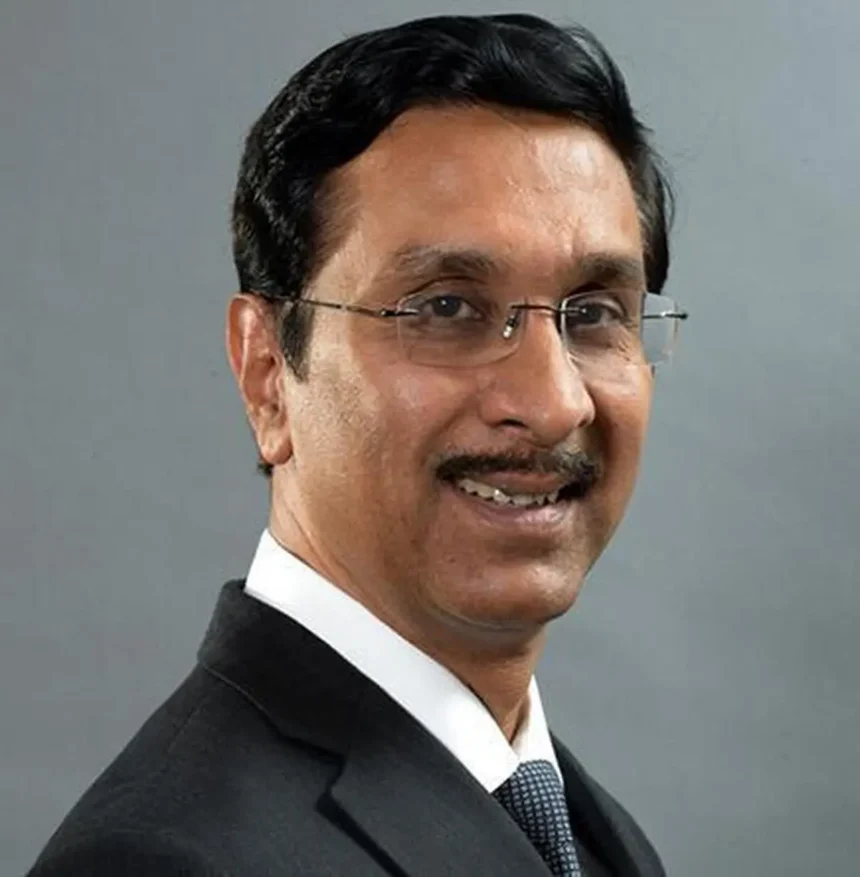
JSW Steel has surprised the market with a bumper profit despite growing uncertainty over geopolitical tensions. It has also announced a huge capex on greenfield projects in Odisha and Andhra Pradesh. The company is bullish on Indian economy and growth in domestic demand in the near future. Jayant Acharya, Joint Managing director and CEO, JSW Steel spoke to businessline on the way forward. Excerpt:
What led to better Q1 performance despite pricing pressure?
Though price moderated, especially in longs (TMT) and less in flat products, the Q1 performance had the benefit of tailwinds. In fact, steel prices started recovering in the March quarter and it played out fully in the June quarter. Moreover, our product mix was more oriented to flats. TMT prices was down due to labour shortages in some project locations. However, our specials and flats did very well. So the mix was more oriented to flats and specials, and that gave us a better mix in addition to price.
Do you see pricing pressure in Q2 due to monsoon slowing down infrastructure projects?
TMT prices have already moderated. The exit price in June was lower and this will have some impact in July in TMT prices. However, our exposure to TMT is very low at about 10 per cent. We are not anticipating much price movement on flats, wire rod, or alloy longs. They should remain range-bound. On cost, we expect coking coal prices to go up by $12 to $15 this quarter. Restart of BF3 (blast furnace) should give higher volumes in Q2. Additional volumes will help to mitigate cost pressure. Though the benefit of higher volume will be offset, to some extent, by rise coking coal cost. There will also be some efficiency gain. Moreover, iron ore prices have also started trending down, which will mitigate part of the cost pressure.
Will demand sustain in rain impacted Q2?
I look at the year as a whole rather than quarter-to-quarter. We expect the demand to increase about 8 per cent, which should be 12 to 13 million tonnes of incremental demand. As and when the conflict normalises, reconstruction demand in the world will surface sooner. IMF has already projected a better 2027. Construction activities should revive demand in West Asia, Palestine, Iran, Ukraine and Europe. Europe will rebuild infrastructure and defence, and this calls for lot of steel from various producers worldwide. Whether we contribute directly or indirectly, it will enhance overall supply-demand equation and give us an opportunity to participate. Engineering exports from India will also improve, creating further traction in the domestic market.
Will rise in imports impact your sales?
Imports have increased in Q1, especially flats were up by 42 per cent, HR coil up 126 per cent. Japan, China, Russia have increased imports by over 100 per cent despite the prevailing safeguard. The industry has made a representation and the government has initiated an anti-dumping measure on hot-rolled products to ensure fair trade. The industry should not be subjected to surplus trade flows, especially given the geopolitical challenges the world is going through. It is a quasi-judicial process and will take time to play out. The government will take steps to ensure fair trade.
Why the Quality control order did not stop cheap substandard imports?
I would not be able to comment on that right now, but quality control is very important from the point of view of standards. It is important for the consumer to get the right quality and right standard. This is the basic right of every citizen, and that is what the quality control order should aim to ensure. We should not allow defective or inferior material into the country.
Will trade pact with UK help Indian steel industry?
It is a positive thing overall that’s been concluded. There is a quota in downstream operations for UK producers who require steel from outside — a specific quota outside the regular arrangement, which can be tapped to some extent, as was the case last year too. Other than that, quotas have not changed too much. Our focus continues to remain domestic. Our exports have been at about 10 per cent or so.
Will the cost of production at your planned electric arc furnace plant be higher?
We are planning renewable energy in that belt, so it will also be a low-carbon steel. JSW Energy has already started renewable energy project required for the plant. The plant that will be completed by FY29 will use both DRI and scrap as input. The steel plant will meet demand for beams and can also be exported. We have also added rail capability to the structural mill that we are building at Vijayanagar / Raigarh (Chhattisgarh). It will produce both beams and rails. Both products are value-accretive and should add to our value-added portfolio and bottom line.
Will you get premium for steel produced through electric arc furnace?
We already have the Green Edge brand for green steel and have already booked one order in Europe. It carries a green premium available in that market. We will see how that goes. We can create a carbon bank. However, if carbon emissions are below a certain level, the product automatically get the premium.
When will you take up joint venture project with POSCO?
We are moving for clearances, getting the land boundary wall and other clearances done. Once we have visibility on that, we’ll start construction. Environmental clearance is yet to come, and construction will start there after. It should start sometime early next year.
Published on July 19, 2026