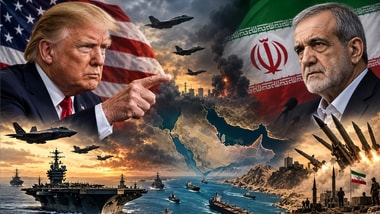
Many Iranians are reportedly bracing for a possible return to full-scale war as US President Donald Trump and Israeli Prime Minister Benjamin Netanyahu intensify their threats against Tehran, fuelling fears that hostilities could resume around the US midterm elections on November 3.
Trump has vowed to “finish the job” in Iran, while Washington is bolstering its military presence in the by deploying a third aircraft carrier strike group and thousands of additional sailors and Marines.
The buildup has raised concerns that the US could launch fresh strikes after the elections, even as Iran’s leadership remains defiant in the face of mounting military and economic pressure.
Netanyahu, meanwhile, faces a politically sensitive vote on Tuesday and has called for Iran’s leadership to be eliminated, adding to uncertainty over the prospects for de-escalation.
Tehran is preparing for the possibility of renewed US strikes and a potential retaliation campaign across West Asia, including against Israel and the United Arab Emirates, according to an Associated Press report citing a person familiar with Iran’s thinking.
Iranian leaders reportedly believe Trump could order fresh attacks regardless of the outcome of the US midterm elections.
Sasan Karimi, a former government official and foreign policy professor at the University of Tehran, said Tehran was preparing for different scenarios.
“They’ve accepted that he will attack us again, before or after the elections,” Karimi said, as per AP.
The period between the November 3 elections and the new US Congress taking office in January could prove particularly volatile, with political calculations and military preparations shaping decisions on both sides.
Washington is expanding its military options in the region, with another aircraft carrier strike group and additional personnel heading towards the Middle East.
US Defence Secretary Pete also made an unannounced visit to Israel last week, meeting Netanyahu days before the Israeli leader’s politically sensitive vote.
At the same time, reports of reduced staffing at some US military bases in the region have raised questions about security precautions amid the threat of Iranian counterattacks.
The US State Department has also ordered some diplomats and their families to leave according to reports, as regional tensions widen amid the involvement of Iran-backed Houthi forces.
Iran’s leadership has also threatened to target and regional allies if Washington resumes its attacks. Tehran has warned that it could expand its targets to include undersea data cables running through the Strait of Hormuz.
The strategic waterway has already emerged as a major flashpoint. This month saw the highest number of reported attacks on commercial ships transiting the strait since the opening weeks of the war in March.
Alongside military threats, Iran is facing mounting economic pressure. A US of Iranian ports has restricted oil exports, a crucial source of government revenue, as Washington and Tehran attempt to outlast each other.
Trade has also been disrupted, with trucks piling up at border crossings as Iranian commerce shifts towards overland routes.
The growing economic strain could complicate Tehran’s response to any renewed military campaign.
Despite escalating rhetoric and military preparations, a negotiated settlement remains a potential route to preventing a wider conflict. Iran’s Foreign Minister Abbas Araghchi said on Sunday that a deal was the way out of the current crisis.