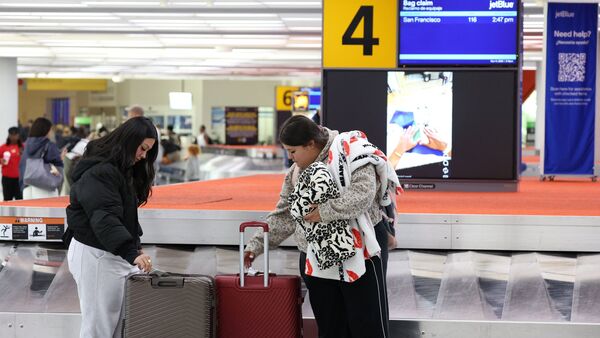
Indian travellers are rethinking overseas holiday plans as geopolitical tensions, rising airfares and tighter immigration curbs push them away from traditional destinations towards Japan, Vietnam and Central Asia.
“Indian travellers are substituting destinations. We don’t see a decline in travel. Though there is no substantial increase this year either,” said Radhika Khanijo, founder of Delhi-based luxury travel agency Welgrow Travels.
Passengers flying out of India fell 7% year-on-year to 18.4 million during January-June 2026, according to the Directorate General of Civil Aviation (DGCA). Indian carriers bore the brunt, carrying 19.4% fewer international passengers, while foreign airlines registered 4.2% growth. Consequently, Indian carriers’ share of outbound passenger traffic fell to 39.7% from 46% a year ago.
Separately, compiled by tourism consultancy Videc and accessed by Mint showed India’s outbound departures nearly 8% to 19.8 million during January-August, from 21.5 million a year ago. The data also pointed to a moderation in the decline in recent months: departures fell by an average 4.5% on-year during June-August, compared with nearly 19% during March-May.
Airfares across domestic and international routes rose by an estimated 20-45% between March and October 2026, adding to costs. Pakistan’s continued airspace restrictions have also forced Indian carriers to take longer routes to Europe and North America, particularly from Delhi, according to Videc.
“Around two-thirds of Indian outbound travel is typically to destinations within five to six hours of flying time, including the Gulf and South-East Asia. With the West Asia conflict affecting the Gulf corridor, some demand has shifted towards other nearby destinations, although the gains for South-East Asia have so far been marginal,” Virendra Jain, co-founder and chief executive of Videc told Mint.
Ruchi Kohli, chief of experience at luxury travel company Away&Co (CT Signature Tours Pvt. Ltd), added that higher airfares are prompting travellers to shorten their holidays rather than abandon overseas trips altogether.
“Airfares are very high, so we recommend that travellers book well in advance. They want experience-led destinations, but they are taking shorter trips; we have noticed a reduction in the number of days of trips, even among wealthy travellers,” she said.
Arshdeep Anand, owner of outbound travel company HMA Spectrum Handcrafted Holidays, added that 2026 is a year of diversification rather than a slowdown, with growing interest in Asian destinations and adventure-led holidays, involving trekking, safaris, cycling and expedition cruises.
She said 77% of Indian outbound travellers are open to adventure travel, representing a potential $31.8 billion market, citing an October 2026 report from the Adventure Travel Trade Association (ATTA).
Kohli said despite airfares rising at least 25-30% following the Gulf war, Away&Co recorded 25% growth in its leisure travel business, driven by demand for more distinctive destinations.
While Away&Co’s ultra-rich travellers continue to spend ₹5-6 lakh per person on business-class tickets alone, others are becoming more conscious of airfare and hotel costs and are avoiding peak travel periods where possible.
The Gulf’s dominance in India’s outbound travel market has strengthened over the longer term, despite the recent disruption. Ministry of tourism data compiled through 2025 and released in early 2026 showed that departures to the United Arab Emirates (UAE) rose to 8.65 million in 2025 from 7.79 million in 2024 and 6.39 million in 2019.
The UAE accounted for 26.34% of all Indian outbound departures in 2025, retaining its position as the country’s most visited overseas destination. Saudi Arabia ranked second, with 3.38 million departures.
Thailand, meanwhile, overtook the US to become India’s third-largest outbound destination in 2024 and retained that position in 2025, with 2.23 million departures. The US ranked fourth, with 2.01 million, while Vietnam’s entry into the top 15 in 2024 and its retention of 13th place in 2025, with 620,000 departures, also pointed to the growing appeal of newer Asian destinations, the tourism ministry data showed.
Jain added that the bigger gains have come from destinations such as Japan and some Central Asian countries, which are increasingly targeting Indian travellers. Their relatively smaller starting bases have also allowed them to register faster growth. Indian arrivals in Vietnam and the Philippines increased 33% and 32%, respectively, during January-August 2026. Japan and South Korea each recorded 19% growth, he said.
The longer-term opportunity for emerging destinations, he said, will come from the expansion of India’s outbound travel market itself. As the number of Indians travelling abroad grows to 40 million or more annually, Central Asian and other emerging destinations could capture a larger share of this demand.
Long-haul travel, meanwhile, is facing a different set of pressures. The US recorded a nearly 26% decline in Indian departures to 1.2 million during January-August. Its share of outbound traffic fell from 7.3% to 5.9%. The UK saw a smaller decline of 7.2%, while traffic to Canada also weakened, according to Videc.
Khanijo of Welgrow added that once uncertainties settle down, Indian travellers will be back to visiting their destination of choice. “Let’s not forget Australia, New Zealand and the Alps in Europe are trending and so is Japan,” he said.