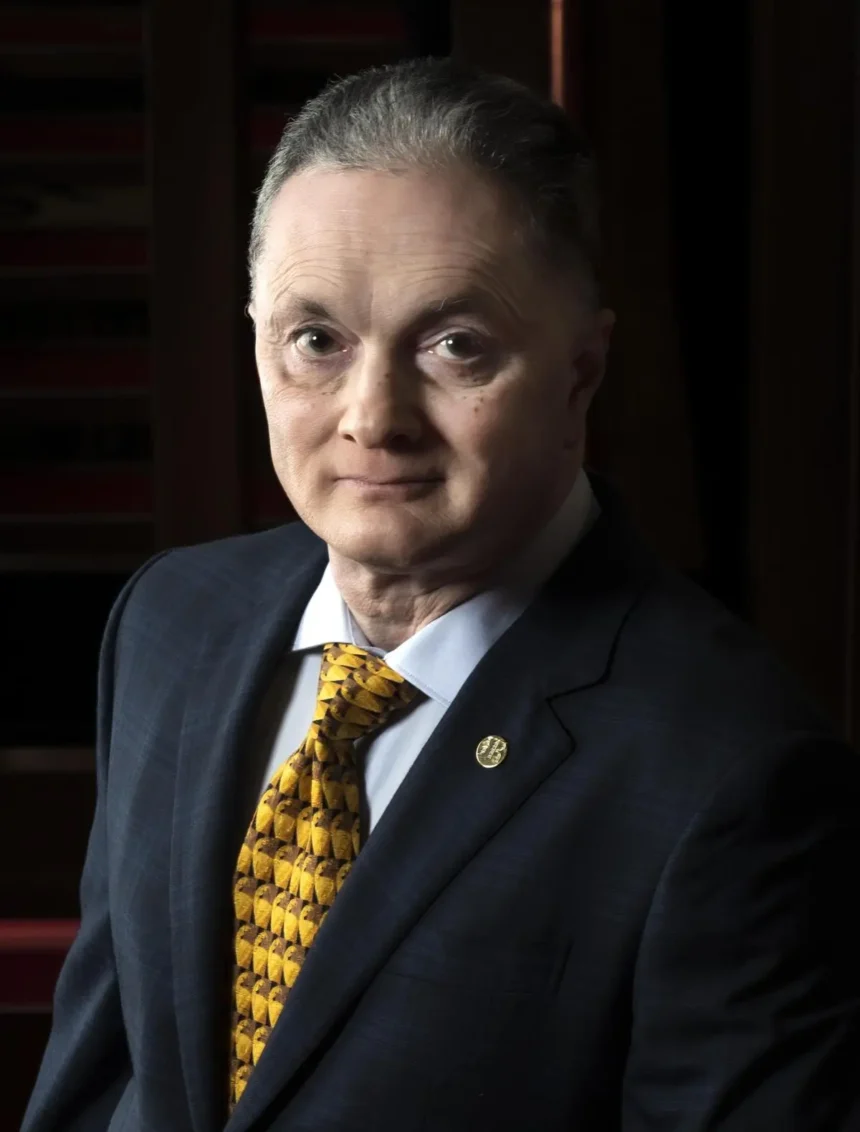
The century old Raymond Group has undergone a massive reorganisation, emerging as a net debt-free company. Following the demerged of its lifestyle and real estate businesses into a separate listed entity Raymond Lifestyle and Raymond Realty, Raymond has retained the core engineering and precision manufacturing entity (including JK Files & Engineering and Maini Precision Products) focusing on aerospace, defence and auto/EV component. Gautam Hari Singhania, Chairman and Managing Director, Raymond Group spoke to businessline to discuss the road ahead.
Edited excerpts:
What is your five-year ambition for the group’s combined market value and profitability?
Our endeavour is to ensure that each of our three listed companies, Raymond, Raymond Realty and Raymond Lifestyle, creates sustainable long-term shareholder value, with a focus on improving the quality and balance of earnings. Our portfolio EBITDA grew 15 per cent year-on-year in H1 FY27 to ₹792 crore, with Realty and Engineering contributing about 49 per cent. Deleveraging, liquidity management, and disciplined capital allocation remain central to our strategy. Lifestyle is building on its brands and distribution strength, Realty is advancing its development pipeline, while the Engineering, Aerospace and Defence businesses are expanding their presence in high-value manufacturing.
How are you strengthening professional management and succession planning across the three listed companies?
My role as a promoter is not to have all the answers. It is to build teams that can take the organisation further than any one individual could. That is the real succession plan. Each entity now has its own board, leadership team, strategic priorities and accountability framework. We need specialised capabilities across consumer businesses, real estate, advanced engineering, global markets, technology and capital allocation. Accordingly, we have brought in external leaders while retaining the institutional knowledge of people who have grown with us.
What are the biggest challenges facing Indian manufacturing companies?
The biggest challenge is moving from competing on cost to competing on capability, driven by precision, quality, reliability and consistent execution. Global customers already have established suppliers, and earning their trust takes time. Trade policy uncertainty also requires manufacturers to diversify markets rather than depend on a single geography. China+1 has moved from a trend to an operational imperative. India’s stability, manufacturing capabilities and trusted business environment make it an attractive alternative. For Raymond, this has meant expanding garmenting capacity, strengthening customer relationships and entering markets such as the UK and Europe.
Where do you see the next big opportunity for Raymond that the market may not yet fully appreciate?
I see two significant opportunities. The first is engineering. Raymond is now a lean, net debt-free engineering business, and the market is beginning to recognise aerospace, defence and precision technology as high-value global opportunities rather than legacy industrial businesses. The second is the consumer opportunity within Raymond Lifestyle. Premiumisation and casualisation are still in the early stages of the brand’s evolution. Casual wear currently accounts for only 15-17 per cent of the portfolio in our formalwear brands. We aim to increase this to 20 per cent and eventually 25 per cent.
Can aerospace and defence become the largest growth engine for Raymond?
Aerospace is already one of our fastest-growing engineering verticals, having grown 26 per cent in FY26. The momentum and margin profile are real. We are scaling production, deepening customer relationships and steadily moving into higher-value work. In this sector, credibility is earned through precision, quality and flawless execution. Our defence strategy is still evolving, and we will share more details in due course.
Could aerospace and auto components eventually be separated into independent businesses?
These businesses currently operate under Raymond through JK Maini Precision Technology for auto components and JK Maini Global Aerospace for aerospace and defence. A business deserves an independent identity when it has a distinct opportunity, focused management and sufficient scale to stand on its own. The trigger is not a single number but whether a separation creates shareholder value and enables each business to fund its growth independently.
With Mumbai property prices at elevated levels, how do you see real estate demand sustaining itself?
Our approach is built around resilience rather than dependence on price momentum. We have a strong land bank in the Mumbai Metropolitan Region, proven development capabilities and an asset-light joint development model. This allows us to avoid carrying excessive capital risk. We remain focused on execution, customer experience and timely delivery, which help sustain demand across market cycles.
What is the outlook for domestic textile demand and exports?
Domestic demand remains strong, supported by India’s young population, rising incomes and favourable demographics. On exports, the US remains a key market, while tariff uncertainty is prompting expansion in the UK and Europe. Lower duties under trade agreements should help scale up business from customers such as Charles Tyrwhitt and Ted Baker. While these orders are smaller, lower duties under trade agreements should help convert initial engagements into larger business opportunities.
What investments are planned at the Andhra Pradesh manufacturing facility?
Raymond is expanding capacity in Andhra Pradesh through brownfield expansion and a planned greenfield facility to support growth in aerospace and automotive components. We already supply critical aero-engine and landing-gear parts and are focused on deepening global customer relationships while moving into more technologically advanced, higher-value manufacturing.
Published on November 15, 2026