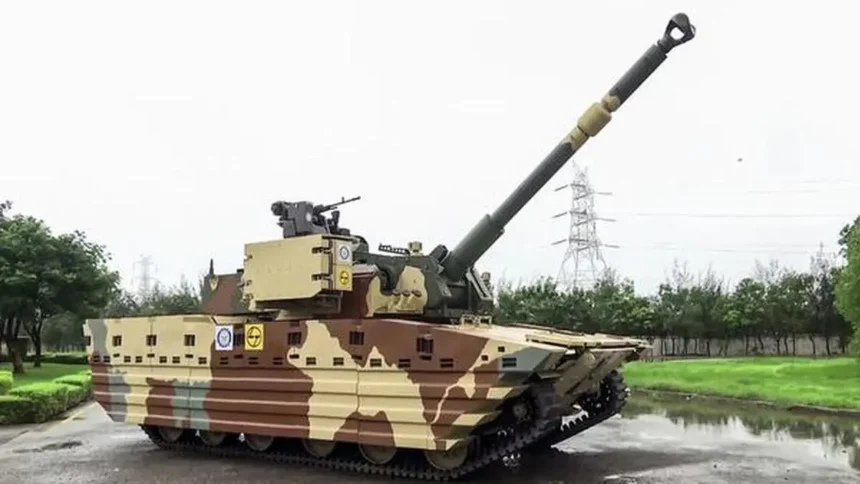
To address supply chain constraints and bridge gaps left by traditional defence PSUs, the Indian Army is now reaching out to the private industry, mainly MSMEs and start-ups, for developing and manufacturing combat critical spares and sub-assemblies, among others, of tanks such as T-72 and T-90s, alongside other armoured vehicles. The move is aimed at strategically improving operational efficiency through localised manufacturing and reducing import dependence, said sources in the Army.
The Master General Sustenance (MGS) branch, which oversees revenue procurement for logistics and equipment maintenance in the Army, is soon going to share a compendium of 300 different types of critical spares and their required quantities with the domestic industry as a part of the indigenisation attempt to advance supply chain sovereignty, key to the modern day warfare, said sources in the Army.
This is in addition to a compendium of 200 spares and components shared with the Society of Indian Defence Manufacturers (SIDM) — an apex body of the domestic defence industry — on August 18, this year. By way of the interface, the Army has sent out a clear message to the industry that it’s no longer mere suppliers but integral components of the national combat force, said officials, adding that focus was on addressing supply chain challenges and ensuring ease of business.
The initiative flowed from a new sustenance policy introduced a couple of years ago since the DPSUs, manufacturing tanks and armoured vehicles for decades struggled to develop them inhouse, forcing the MGS branch deciding to give definitive business-friendly visibility to the private industry.
The Branch and its Indigenisation Directorate opened up with a list of 375 specific parts in 2025 that the defence companies could innovate and produce across various segments, including from spares of engines to electronics and metallurgy. Out of roughly 450,000 total spares identified for replacement or upgrades, the Army is actively working to indigenise some 50,000 critical items essential for platform upkeep.
The Army has channelled over ₹97 crore in business to domestic industries through 2,340 supply orders over the past few years, significantly reducing costs to the exchequer. These orders covered 1,073 items specifically targeted for indigenisation and their costs have fallen by one-third due to R&D carried out by contracted firms.
According to officials, strict warranty clauses, lifetime sustenance frameworks, and integrated engineering support packages are factored directly into production costs and order volumes.
Before Aatmanirbharta was enforced in the defence sector since 2014, India was dependent on Russian and adjoining countries for supply of these spares. Since Russia-Ukraine war, India started diversifying its global supply chain for meeting its maintenance and repair requirements, besides strengthening indigenous industry for self-reliance.
Published on November 10, 2026