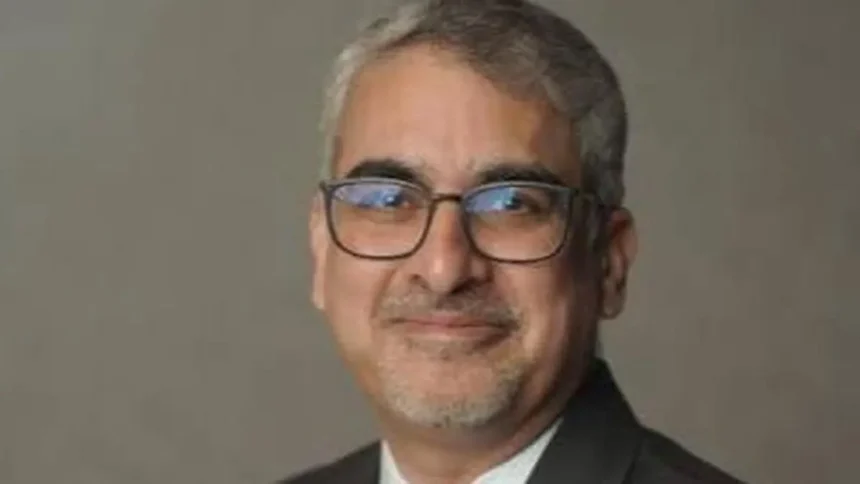
As demand for electric and new-energy vehicles accelerates, JSW MG Motor India is preparing for its next phase of growth with investments of up to ₹4,500 crore over three years. In an interview with businessline, Anurag Mehrotra, Managing Director, JSW MG Motor India spoke about capacity expansion, localisation, profitability, supply-chain challenges, upcoming powertrains, and MG’s positioning within JSW’s evolving automotive ambitions in India.
Edited Excerpts:
MG’s October retail registrations rose 3.4% month-on-month against 15.1% industry growth. What explains the gap?
Compared with calendar year 2025, demand, or bookings, in 2026 have grown by approximately 25-30%. The slower growth was not due to a lack of demand. Container rates rose sharply, partly because of the West Asia crisis and strong demand across product categories. We also experienced production losses during the Tomahawk ramp-up. Those challenges are now behind us. October was a turning point, and we expect to grow faster than the industry for the remainder of the financial year.
How will the ₹4,500 crore investment programme expand production?
Our capital expenditure this year will be close to ₹1,500 crore, directed towards new products, localisation, and plant expansion. Overall, we are looking at investments of approximately ₹3,000-4,500 crore over three years. Our annual plant capacity currently stands at around 1.2 lakh vehicles. By April 2027, we expect to increase it to 1.6 lakh vehicles. We have introduced three products this year, with another announcement expected next quarter.
With MG yet to commit to one lakh sales in FY27, how will you balance volume growth and profitability?
For now, we need to focus on getting products into the market. As we unlock production over the next couple of months, we will be in a better position to discuss numbers. The focus should be on revenue and profitability rather than volume alone. The biggest driver of profitability is localisation. I would rather have lower volumes with stronger profitability than higher volumes with weaker margins.
How will localisation, particularly battery cells, reduce import dependence?
We have already tripled localisation levels for the Windsor. The board has approved the investment required to double that again by the end of the next calendar year.
Battery assembly, including the battery management system, is fully localised at our Halol facility. We may continue sourcing battery cells from China for now. At the same time, we work closely with Indian suppliers for battery assembly. As cell manufacturing capabilities develop in India, we would be happy to source locally.
Windsor dispatches fell from 4,659 units in July to 3,300 units in September. What does this indicate about demand?
The Windsor continues to sell between 3,500 and 4,000 units a month, largely in line with last year’s performance. This is not a demand issue. We have been dealing with supply-chain disruptions, and the plant has been operating at full capacity.
In October, Windsor volumes again approached 4,000 units. Cumulatively, from January to October 2026, Windsor remained the country’s best-selling EV. With supply-chain constraints now largely behind us, we expect demand momentum to continue.
With EVs accounting for 81.9% of MG’s registrations, where will future growth come from?
Around 70-75% of our portfolio will continue to comprise new-energy vehicles. At the same time, we will remain opportunistic in the internal combustion engine segment where we believe we can compete effectively. Our Adapt platform can support battery-electric vehicles, plug-in hybrids, strong hybrids, and range-extended EVs. Deliveries of our plug-in hybrid model are expected to begin this month. We also plan to introduce a range-extended EV by 2030. CNG is not part of our strategy at present.
How are Tomahawk bookings progressing, and when will stronger demand translate into deliveries?
Bookings are very encouraging and reflect strong customer interest. However, I would prefer to focus on producing and delivering vehicles before discussing booking numbers in detail. Tomahawk customers have highlighted the vehicle’s smooth driving experience, quiet cabin, and generous second-row legroom. Feedback has been extremely positive.
With JSW developing its own passenger vehicle business and exploring a Skoda-Volkswagen partnership, where will MG fit if JSW raises its stake?
The question of JSW increasing its stake is best answered by JSW and SAIC. My responsibility is to execute the vision laid out by our shareholders in March 2024 and build a leading automotive brand in the new-energy vehicle space. Today, more than 75% of our sales come from new-energy vehicles. And yes, if JSW Motors enters the market, we will compete with it just as intensely as we compete with every other automaker.
Published on November 9, 2026