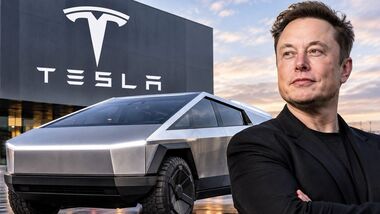
Tesla CEO Elon Musk has announced plans to wind down production of the company’s controversial Cybertruck pickup at its Texas factory around the middle of 2027, as the electric vehicle maker prepares to make more room for its Cybercab robotaxi.
The announcement marks a significant shift in Tesla’s product strategy, particularly for a vehicle that once presented as a symbol of the company’s futuristic ambitions. The Cybertruck attracted considerable attention when it was unveiled but struggled to achieve the sales volumes initially anticipated.
“Tesla will be winding down production of the Cybertruck at Gigafactory Texas around the middle of next year to make room for increased Cybercab production,” Musk wrote on X.
made the announcement on Friday but did not clarify whether Cybertruck production would be shifted to another facility or discontinued entirely. He also did not provide details about how Tesla would handle outstanding customer orders.
Wes Morrill, the Cybertruck’s lead engineer, wrote in a separate post that the truck “was an incredible technology development platform and lives on through Cybercab.”
“Thanks to everyone who contributed to making the future (look) like the future,” he added.
Following the announcement, several Tesla enthusiasts expressed disappointment on X, the social media platform owned by Musk. Reassuring customers, the billionaire said the existing Cybertruck fleet would remain on the roads for a long time.
Tesla plans to use the manufacturing capacity currently occupied by Cybertruck production at its Texas facility to accommodate the Cybercab robotaxi.
The two-seat autonomous vehicle, which does not have a steering wheel or pedals, was unveiled in October 2024 as part of Musk’s broader strategy to transform Tesla into an artificial intelligence and robotics company.
Tesla began manufacturing the Cybercab at its Texas factory in April and subsequently started offering paid rides in Austin in September through its existing Robotaxi service.
The robotaxi project is central to Musk’s ambition to reduce Tesla’s dependence on conventional vehicle manufacturing and establish new revenue streams through autonomous transportation.
However, the commercial success of this strategy depends heavily on Tesla’s ability to develop and deploy fully driverless technology on a large scale, something the company has yet to demonstrate.
The Cybertruck was unveiled in November 2019, with Musk claiming that the company had received 250,000 pre-orders within days of its launch.
Tesla initially planned to begin production in 2021, but manufacturing was repeatedly delayed. Customer deliveries eventually started in late 2023.
The company established production lines at its Texas factory with an intended annual manufacturing capacity of 250,000 Cybertrucks. However, actual sales remained considerably below that target.
According to estimates by Cox Automotive, total Cybertruck sales reached approximately 72,702 units, with more than half of those sales recorded in 2024. Demand subsequently weakened.
Tesla does not separately disclose Cybertruck revenue. Instead, the pickup is included in its ‘other models’ category, which contributes only a small proportion of the company’s overall sales.
Amid weakening demand in the United States, Tesla attempted to expand the Cybertruck’s international presence.
The company began deliveries in South Korea in November 2025, followed by the United Arab Emirates in January.
However, the vehicle also faced several challenges, including multiple recalls and customer complaints concerning build quality.
The planned production shutdown reflects Musk’s broader effort to reposition Tesla as an artificial intelligence and robotics company rather than simply an electric vehicle manufacturer.
The Cybercab is expected to play a crucial role in this transition, with autonomous ride-hailing services potentially becoming a major part of Tesla’s future business model.
Whether the robotaxi business can deliver on Musk’s ambitious promises will depend on technological progress, regulatory approvals and the successful deployment of reliable driverless vehicles.