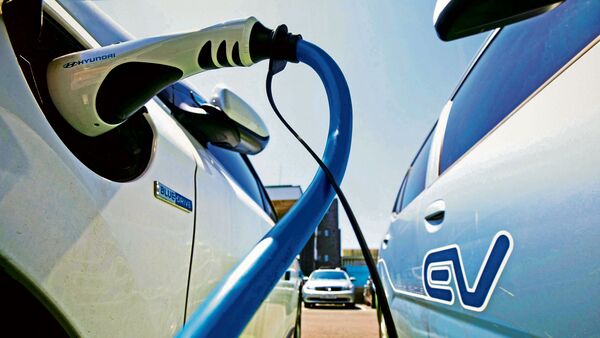
Finnish state-run energy utility Fortum Oyj has scrapped the plan to sell Glida, its electric-vehicle charging network business in India, to the promoters of the Gurugram-headquartered JBM Group, according to two people aware of the development.
Instead, the Finnish energy major plans to continue operating its Glida charger brand, with 961 charging points across the country, according to people cited above who requested anonymity.
“The stake sale for Glida has been cancelled. Fortum plans to run Glida on its own in India,” said one of the people cited above.
This comes against the backdrop of India’s green mobility push, which depends on an effective EV charging network, as the country’s electric mobility ecosystem expands and investments in vehicle, component, and charger manufacturing increase.
Electric vehicle adoption has increased from 4.71% in 2022 to 8.05% in 2025, and crossed 10% in the January-October period in 2026, data from the government’s Vahan registry of new vehicles showed. About 2.65 million electric vehicles were sold through 16 October 2026, compared with 2.35 million in 2025 and 2.02 million in 2024, indicating a steady rise in adoption.
India is the world’s largest electric three-wheeler market and the world’s third-largest e-bus market, according to the 2026 Global EV Outlook by the International Energy Agency (IEA), based on 2025 performance. JBM Group was India’s largest e-bus manufacturer by sales, with 1,260 e-buses sold in FY26.
Some of the largest charge point operators (CPOs) in India are state-run oil marketing companies, including Indian Oil Corp., Hindustan Petroleum Corp., and Bharat Petroleum Corp.
JBM Group’s e-bus business had an order book of ₹12,900 crore as of September 2026, according to a company statement, largely driven by orders for overhauling public fleets under the PM e-Bus Sewa scheme.
Global economic headwinds, such as conflict-driven supply chain disruptions during the US-Iran war earlier this year, pushed crude oil prices above $100 per barrel at times, posing a challenge for India, which has near-90% dependence on oil imports.
India, also the world’s third-largest automobile market by sales, chose to focus on faster adoption of electric mobility, with Prime Minister Narendra Modi in May this year calling for increased EV adoption amid surging oil prices.
The sale of Glida would have marked the culmination of the third-largest Nordic power generator’s complete exit from the Indian market, which it entered in 2012.
London-based Opus Corporate Finance LLP was running the transaction code-named Butterfly for Glida, formerly known as Fortum Charge & Drive India. Mint had earlier reported in December 2025 that Adani TotalEnergies E-mobility Ltd, Reliance BP Mobility Ltd, and JBM Group had signed non-disclosure agreements (NDAs) for the proposed deal, followed by an exclusivity pact between Fortum and JBM.
Queries emailed to Fortum India, Opus Corporate Finance, and JBM Group on 18 October remained unanswered.
A Fortum Oyj spokesperson said in an emailed response, “As a stock-listed company, we do not comment on any market rumours or speculations.”
Meanwhile, India’s public charging options are increasing, with 67,702 available as of October 2026, including battery-swapping stations, according to state-run Ltd’s (Bhel’s) database. The firm is the nodal body for EV charger subsidies under the flagship ₹11,900 crore PM E-Drive scheme.
While electric two-wheelers and four-wheelers are generally charged by people at home, commercial vehicles, including small three-wheelers and large buses and trucks, utilise public charging options. Some commercial vehicle operators also strike deals with charge point operators (CPOs) to secure lower electricity rates in exchange for guaranteed charger utilisation.
As of October, India has around 80 charge point operators in the ecosystem, including state-run oil marketing companies and private-sector firms.
Electric mobility experts say the utilisation of EV chargers depends on EV adoption, but only up to a point, as consumers eventually fear they will not find a free charger. “Globally, charging is not a standalone profitable business. International examples show that charge point operators start reporting positive Ebitda at around 20% EV penetration,” said Amit Bhatt, India managing director of the International Council on Clean Transportation (ICCT), a global think tank.
Bundling charging with cafes, food courts and other services can improve charger utilisation as EV adoption grows, Bhatt said.