



Tata Motors Passenger Vehicles Ltd has become the latest carmaker to offer battery-as-a-service (BaaS), a model that lowers the upfront cost of electric vehicles. The trend picked up after Maruti Suzuki India Ltd introduced BaaS in February, with Mahindra & Mahindra Ltd and Hyundai Motor India Ltd subsequently entering the space. Mint examines whether it offers real advantages for consumers.
The purpose of BaaS was not to drive sales but to attract customers to showrooms, according to auto industry executives. However, the model has yet to find many takers. Most consumers continue to buy vehicles with the battery, giving them full ownership of the car. This is also one reason not all automakers have introduced the service, with ’s Bhavish Aggarwal saying in 2025 that the offering is essentially a financing scheme.
Higher battery costs. A battery accounts for more than a third of an EV’s cost. With China also removing export incentives for EV batteries and logistics costs rising in the aftermath of the West Asia war, higher battery costs are prompting carmakers to explore new ways to lower costs for consumers.
Over the past few months, homegrown carmakers Tata Motors PV and M&M have expanded their BaaS offerings across their EV portfolios. With the West Asia-driven surge in sales pushing penetration in passenger vehicles closer to 8%, from about 4% at the end of the last fiscal year, carmakers are looking to lower entry barriers for consumers. Since most customers finance their car purchases, carmakers are offering batteries separately as a loan product, allowing buyers to split the payment burden.
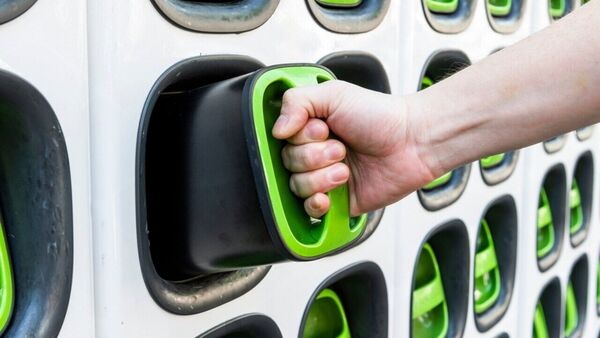
BaaS is not widely available, with a few companies offering it in China and some European countries, including Germany, Sweden, Denmark and the Netherlands. The model is also often paired with battery-swapping networks, where two-wheeler users pay a monthly subscription and swap batteries when they run out of charge. In India, however, the model has yet to take off fully. While carmakers are increasingly offering BaaS, consumers continue to prefer full ownership, with lower upfront costs largely serving to attract new customers to showrooms.