


India’s medal-winning campaign at the 2026 Asian Games in Aichi-Nagoya has drawn contributions from across the country, with athletes from 17 states and the Union Territory of Chandigarh among those who have won medals so far.
The geographical spread becomes clearer when individual medal winners and members of India’s medal-winning teams are considered together. India had reached 48 medals by Tuesday, comprising five gold, 21 silver, and 22 bronze. ‘s gold in the women’s individual trap event was the country’s latest top-podium finish.
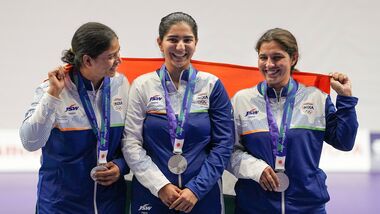
Haryana has featured prominently in India’s medal-winning group. Shooting gold medallists Suruchi Singh and Kamaljeet are both from Haryana, with Suruchi hailing from Jhajjar and Kamaljeet from Rewari. Shooter Himanshu Dhillon, who has won silver in the men’s 10m air rifle, is also from Haryana.
The state has also been represented by several members of India’s medal-winning athletics and kabaddi contingents.
Maharashtra is another major contributor, with shooters such as Rudrankksh Patil and Parth Mane among India’s medal winners. Table tennis player Diya Chitale, who won a bronze medal in mixed doubles with Manush Shah, also represents Maharashtra.
Tamil Nadu has been represented by athletes including Baranica Elangovan, who won India’s first-ever Asian Games medal in women’s pole vault, while Vithya Ramraj was part of India’s mixed 4x400m relay silver-medal winning team and later won individual bronze in the 400m hurdles.
Kerala has also featured prominently. Shooter Vidarsa K Vinod was part of India’s women’s 10m air rifle silver-medal-winning team, while long jumper Murali Sreeshankar and long jumper Ancy Sojan have also contributed medals.
Karnataka, Andhra Pradesh and Telangana have also had athletes on the podium, while Gujarat has been represented by shooter Elavenil Valarivan, who won individual and team silver medals. It should be noted, however, that Valarivan was born in Tamil Nadu but represents Gujarat in domestic competitions.
Punjab’s medal winners include shot putter Tajinderpal Singh Toor and rower Satnam Singh, while Uttar Pradesh has produced medallists including Gulveer Singh and rower Salman Khan. Salman, who comes from Amethi, won bronze alongside Satnam in the men’s double sculls.
Manipur has contributed through weightlifting legend and wushu star Naorem Roshibina Devi. Roshibina won silver in the women’s 60kg sanda event.
Himachal Pradesh has also made its presence felt. Seema Kumari, from Chamba district, won bronze in the women’s 10,000m, while Renuka Singh Thakur was part of India’s women’s cricket gold-medal-winning campaign.
Delhi, West Bengal, Madhya Pradesh, Rajasthan and Uttarakhand have also been represented among India’s medal-winning athletes. Chandigarh has contributed through members of the medal-winning contingent as well.
The distribution underlines the broad geographical footprint of India’s Aichi-Nagoya campaign. Rather than medals coming from a small group of traditional sporting centres alone, India’s podium finishes so far have involved athletes from 18 different states and Union Territories.
With the continuing until 4 October, that geographical map could still expand as India remains involved in several medal events across athletics, shooting, boxing, archery, squash, hockey and other disciplines.