



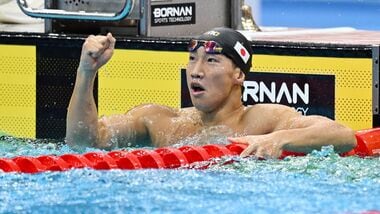
Shin Ohashi etched his name in Asian Games history after the 17-year-old schoolboy shattered a world record in the men’s 200 metres breaststroke event by clocking a blistering 2:04.83s at the Tokyo Aquatics Centre on Wednesday. Ohashi was just a few seconds ahead of the mark of 2:05.48 set by China’s Qin Haiyang at the 2023 world championships in Fukuoka.
With this record, Ohashi became the first Japanese swimmer to break the 200m breaststroke at the in the last 24 years. great Kosuke Kitajima was the last to create a world record at this stage in 2002, which was seven years before Ohashi was born.
Following his win, Ohashi held his arms aloft and bowed to the home crowd. “The world record was my goal so I’m very happy to get it,” he said. This was Ohashi’s second gold at the , after his 100m joint breaststroke gold three days earlier.
But things weren’t as simple for Ohashi as it sounds. Just a week before the Asian Games 2026, Ohashi was diagnosed with -19. In August, the Japanese teenage sensation lowered his own junior world and senior national record in the 100m event on his senior international debut at the Pan Pacific Swimming Championships.
Last year at the World Junior Championships, Ohashi had won won five medals. Ohashi is far from physically imposing. He is only 1.69 meters tall — just under 5-feet-7 — and broke Japan’s national record earlier in the year in the 100-meter breaststroke.
That record had been held by Japan’s Kosuke Kitajima, a four-time gold medalist and three-time world champion.
Ohashi’s coach Shin Ota revealed that his ward remains often glued to his phone. According to Ota, Ohashi possessed a absent-minded personality and looks like he is not thinking about anything. Ota admitted that the world record by his Ohashi came as a surprise to him.
“But, as you can see, he’s got a lot of muscle, but it’s not as though he’s doing weight training. It’s natural muscle, so I think that’s another part of what’s remarkable about him,” Ota said before adding that he could see Ohashi following Kitajima onto an Olympic podium.
“While gaining those experiences one by one and getting accustomed to them, I think he’ll surely be able to win a medal at the Olympics as well. For him to become like Kitajima, he’ll also need to grow as a person,” Ota said.