



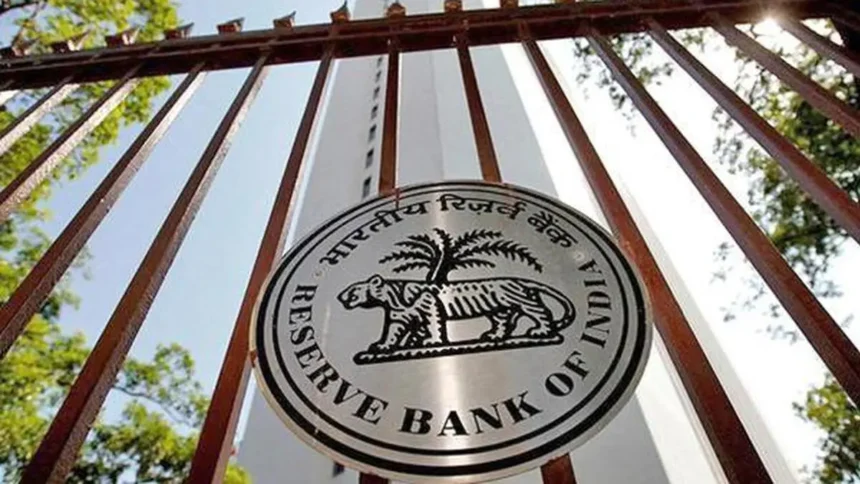
The Reserve Bank of India (RBI) is said to have taken a proactive legal step in the Tata Sons listing matter by filing a caveat in the Bombay High Court after rejecting the company’s request to surrender its Core Investment Company (CIC) registration. The move is designed to ensure that the RBI gets an opportunity to present its arguments before any court grants interim relief to Tata Sons or any other party challenging the regulator’s decision.
The development follows the RBI’s decision to deny Tata Sons’ application to exit the regulatory framework governing upper-layer non-banking financial companies (NBFCs). By rejecting the application, the RBI has retained Tata Sons’ status as an Upper Layer NBFC, keeping the company subject to stricter regulatory norms, including the possibility of a public listing.
Legal experts say the caveat is a precautionary step. It ensures that the RBI gets an opportunity to present its case before any court grants interim relief or a stay on its decision. In effect, the RBI is seeking to avoid any order being passed without first being heard.
Also read: Tata Sons board to discuss RBI’s listing mandate on Thursday
Meanwhile, the talk in legal circles is that Tata Sons is expected to argue the case that its deregistration application, filed in March 2024, ought to be assessed under the regulatory framework that existed at the time of filing, rather than under the revised norms introduced subsequently.
The company may contend that it had taken concrete steps to exit the regulated CIC structure, including retiring debt, with the expectation that its application would be considered on the basis of the rules then in force. The core contention could be that a later change in regulatory criteria should not alter the treatment of a pending application, particularly when the applicant had already initiated the process under an earlier regime.
Tata Sons could also seek to draw parallels with instances where regulators have provided exemptions or relaxations to specific corporate structures on a case-by-case basis. Market participants have pointed to examples involving promoter holding and investment entities within large business groups, including the Sun Pharma ecosystem, where regulatory dispensations were considered in light of unique shareholding and governance arrangements. Tata Sons may argue that its case, too, warrants a tailored approach, rather than a strict application of a regulatory framework that evolved while its deregistration request was pending.
The dispute now appears headed towards becoming a test case on whether regulatory changes can reshape the fate of applications already under consideration. As seen in the RBI-Kotak Mahindra Bank shareholding dispute, courts can scrutinise the regulator’s interpretation of rules, even while upholding its broader policy mandate. For Tata Sons, the battle may ultimately hinge on that distinction.
The RBI did not respond to queries by the time of publication. This story will be updated if and when a response is received.
Published on September 15, 2026