


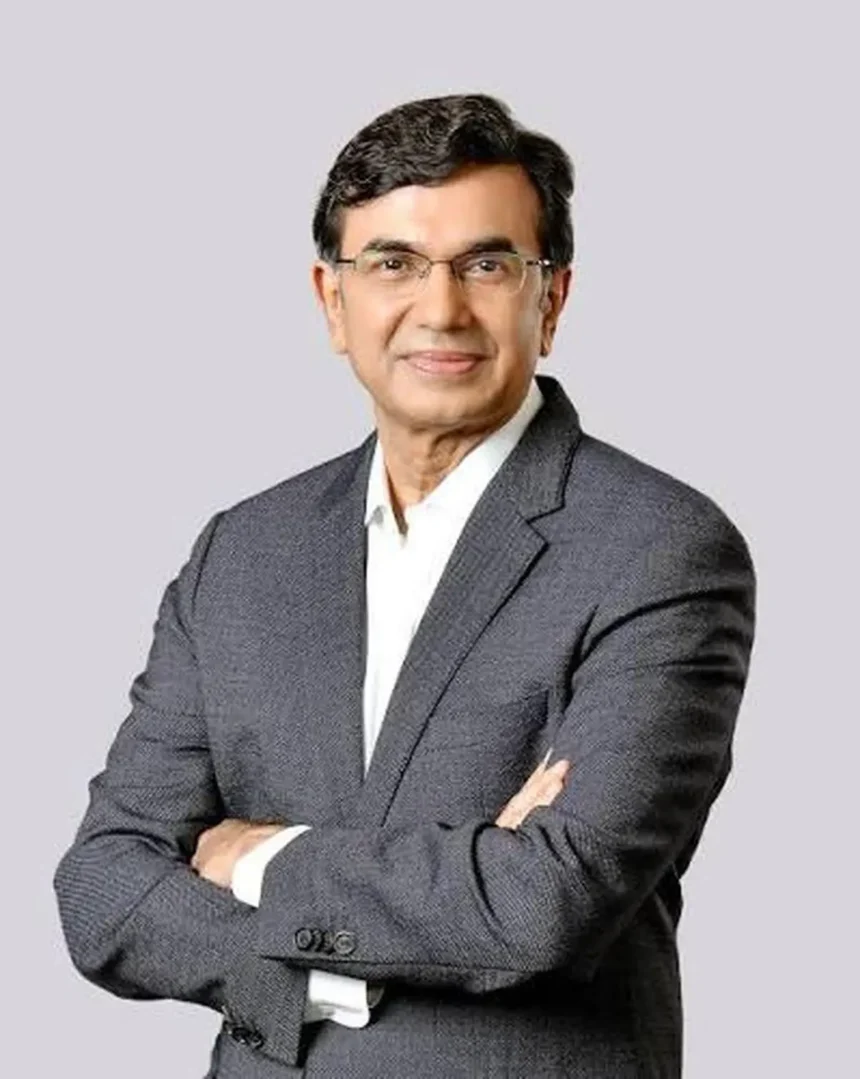
Jejurikar, Executive Director and CEO (Auto and Farm Sector)
From rugged roots to a future-ready mobility powerhouse, Mahindra & Mahindra is redefining itself at speed. Six years after Rajesh Jejurikar took charge of the company’s Auto and Farm sectors, Mahindra is broadening its footprint across SUVs, electric mobility and commercial vehicles while making its core brands bigger than ever. In a conversation with businessline, Jejurikar, Executive Director and CEO (Auto and Farm Sector), reflects on the choices that turned the old Mahindra into the new one, explains how Scorpio, Thar and Bolero continue to anchor the company’s evolving identity, and outlines how platforms such as NU_IQ and its EV push could shape Mahindra’s next phase of growth through FY30.
Edited excerpts:
You took charge of Mahindra’s Auto and Farm sectors in April 2020. Did you expect the company’s transformation to be this significant, and what drove it?
I don’t think in 2020 we thought we would be where we are today. What we did say was that we would focus on areas where we had a right to win. We didn’t want to chase volume market share blindly because you can end up entering segments where you don’t have a right to win or where profitability isn’t right.
We focused on products customers have an affinity for – products that wow customers and are differentiated at their price point through technology, style and design. Our objective was to grow the market and, because our average price points are higher, grow revenue market share. Becoming a strong volume player was a fallout of those actions.
How much of that GST cushion remains after recent price increases, and how differently has it played out across passenger and commercial vehicles?
Even after the price increases, we have not gone back to pre-GST price levels. We have been a little more aggressive on pricing than peers, but for somebody buying a ₹20-30 lakh vehicle, a ₹30,000-40,000 increase, spread over the financing period, is relatively small. The bigger impact would come if prices and interest rates rose together, which has not happened. Demand remains robust and, over the past five or six months, we have been more constrained by supply than demand.
In commercial vehicles, commodity and regulatory costs had pushed prices up by nearly 20 per cent. GST offset a large part of this, reducing acquisition costs by around 8-10 per cent and supporting demand in industries such as cement through better freight movement and vehicle utilisation. I don’t think the CV segment would have revived as easily without GST.
In passenger vehicles, GST significantly improved affordability, especially in the sub ₹10 lakh segment. For higher-priced vehicles, it encouraged customers to upgrade to better brands or variants. So GST did more than stimulate consumption, it improved affordability, enabled upgrades and helped demand move up significantly.
Some of the biggest beneficiaries of the new Mahindra have been its oldest brands. How much more runway do Thar, Scorpio and Bolero have?
When we launched Thar, it was virtually a non-existent category. We created something innovative that struck a chord. It isn’t just the product, it is the product form and the brand coming together.
Scorpio has been around for about 24 years and Bolero for around 26 years. These products are still doing close to 10,000 units a month. That reflects how strong the association between the product form and the brand is.
Does that strength make changing iconic brands riskier?
You have to be very careful about the extent of change. Customers don’t necessarily want something dramatically different. Every change has to be considered.
Look at Scorpio-N. When it came in, Scorpio Classic wasn’t cannibalised; the franchise actually grew. We have to evolve enough, but not so much that customers disconnect from the brand. Even Scorpio-N is an evolution; it retains the elements customers associate with the Scorpio.
How are common platforms changing the economics of Mahindra’s product expansion?
We have significantly scaled up product-development resources over the last few years, including manpower, space and capabilities, including software. But we have also learnt, especially from the BEV world, to standardise platforms and build multiple products from them.
Earlier, Thar, Scorpio or XUV programmes could have supplier discussions independently around the volumes of each programme. Today, with multiple products coming, you can discuss aggregated volumes with suppliers. That commonality gives you scale across programmes.
Has the EV yardstick shifted from penetration to absolute volumes?
The ratio is important because we need it from a regulatory perspective. It is also relevant from the point of view of capital. But what is more important is absolute volume.
If ICE is growing very strongly, are we going to slow down ICE simply so EVs become a certain percentage? No. So rather than getting too fixated on a ratio we spoke about some time ago, we are looking at volume momentum.
The EV journey has been very good for us. It has also helped elevate perceptions of the Mahindra brand around technology, sophistication and design. We see no reason why we won’t cross 1.2 lakh EVs in absolute volume terms. The ratio will also depend on how strongly the ICE business grows.
If absolute EV volumes matter more, doesn’t Mahindra eventually have to move down-market to get scale?
We are not planning to go into the “mass-mass” category. The philosophy doesn’t change. We have to ask what is right for the Mahindra brand and where we can create something differentiated. We don’t enter a segment simply because it gives us volume.
Several rivals see hybrids as a bridge to electrification. If EV is Mahindra’s destination, where do hybrids fit?
Our primary approach is that EV is the destination. As a country and as a company, we remain committed to that because electrification addresses energy security, the environment, cost of ownership and even noise. When a segment of customers feels the need for a hybrid, we will respond. But the economics of hybrids are similar to the earlier diesel-versus-petrol equation: customers with high running paid a higher upfront price for diesel because fuel savings allowed them to recover that premium over three or four years. Hybrids can make sense for a similar set of high-usage customers.
But if an EV is a viable option, you are operating at a fraction of the cost of an ICE vehicle. The remaining concern is charging infrastructure, particularly for longer routes, but that is gradually building up. As that happens, we believe EV will remain the more fundamental long-term strategy.
If 2020-26 was about transforming Mahindra, what will define the Mahindra of FY30?
Our brand has to stand for something, and we have to continue creating products that reflect that — products that wow customers, build affinity and give them technology, style and design they would otherwise have to step up significantly to access.
Electric will continue to be a centrepiece of what we do, and we will continue to innovate through technology while staying true to what the Mahindra brand stands for. That is the philosophy.
Published on August 16, 2026