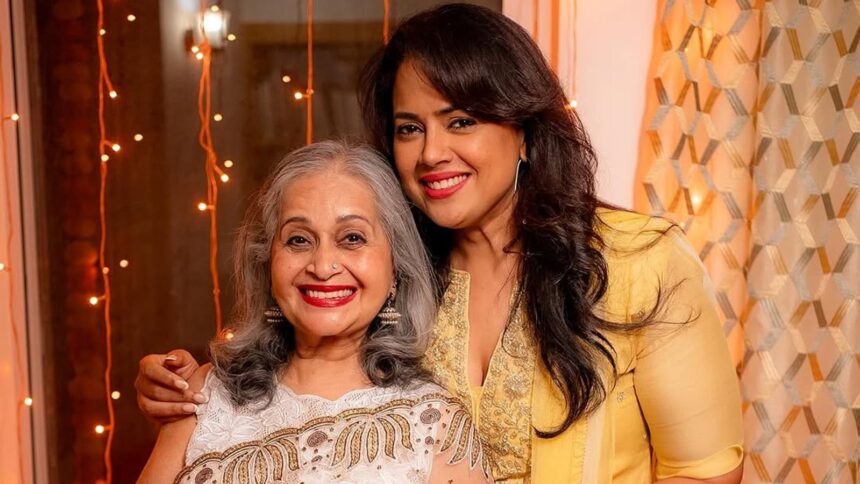
Sameera Reddy shares an enviably warm bond with her mother-in-law, a relationship dynamic so rare in India that it feels refreshing to see. During a recent conversation with Hauterrfly, the Race actor recalled her very first interaction with her husband Akshai Varde’s mother and the valuable advice she shared.
“Akshai has a habit of dating a lot of girls. You are a lovely girl. Just make sure my son knows what he’s doing,” the Bollywood star jokingly recalled their first conversation, adding that her mother-in-law is “really someone who’s been there, spoken to me, been real, always taken my side. Not ki ‘mera beta, mera beta’. She’s always been like, ‘, are you okay? What do you need?’”
It is no secret that kindness and vulnerability transform in-law relationships from duty-based scripts into genuine, empowering connections that strengthen the entire family unit. In this context, Dr Druhin Grover, Consultant Psychiatrist at Yashoda Medicity, explained that authority figures, such as in-laws, are often perceived as strict, emotionally distant, and unapproachable because their roles demand composure and control. “Yet, when they interact with someone who is naturally warm or emotionally open, a quieter transformation unfolds—a gentler, more relaxed side emerges, one that even close family may rarely see,” he said.
Psychologically, this suggests that perceived rigidity is often a role-based behaviour rather than the absence of feeling. Warm, lively individuals create emotional safety and offer acceptance without expectation, allowing the other person to express a side usually held back.
“Without demanding closeness or performance, they create emotional permission, a space where the other person does not need to uphold a role. What surfaces in these moments is not a new personality, but a hidden one, qualities long held back by circumstance rather than absence,” elaborated Dr Grover.
According to him, a daughter-in-law may relate to her mother-in-law not just through roles, but as one adult to another. When a feels emotionally safe and respected, closeness can grow naturally, sometimes into friendship, he said.
In many households, sons often share bonds with parents built more on duty than emotional conversation. But the truth in healthy mother-in-law and daughter-in-law relationships is that emotional safety matters more than who is ‘supposed’ to be closer,” the psychologist added.
For Reddy, warmth and openness—not hierarchy—define their family ties. “These connections flourish most in families that are emotionally open. Homes that value acceptance over hierarchy, and dialogue over control, make space for relationships to find their own rhythm,” said Dr Grover, adding that emotional safety matters more than who is “supposed” to be closer,”
When kindness and openness lead the way, relationships often surprise us in ways that quietly strengthen family life.
According to Sonal Khangarot, licensed rehabilitation counsellor and psychotherapist, The Answer Room Indian families generally follow an unspoken script — respecting your mother-in-law above and beyond anything else. However, genuine connection can’t be forced. “If you feel discomfort, it doesn’t mean you’re disrespectful. It means you’re human, adjusting,” said the pyschologist. “Support from extended family can make all the difference for a new member of the family navigating the uncharted terrains of marriage.”
DISCLAIMER: This article is based on information from the public domain and/or the experts we spoke to.